The MUTCD and You: What Every Property Owner Needs to Know
Published · Updated
What Is the MUTCD?
Learn how to set up private property signs.
MUTCD—these five letters represent a treasure trove of information essential to traffic safety. The Manual on Uniform Traffic Control Devices, or MUTCD, sets the national standard on traffic signs, devices, pavement markings, and more. Most recently, the Federal Highway Administration released the 11th MUTCD edition in December 2023. Traffic authorities—on the federal, state, county, and municipal levels—use the MUTCD for guidance.
MUTCD Signs on Private Property
Those public agencies manage public roads, so you may wonder, “What does this mean for signs on my private property?” You, as a property owner, have a stake in this discussion as well—residents, employees, visitors, shoppers, and restaurant patrons all need to know how to navigate the roads and lots you manage.
Where MUTCD Signs Must Be Used
Section 1B.01 describes which private roads require MUTCD signage. There’s a rule of thumb—MUTCD signs apply when private roads are open to public travel:
- Toll roads – even with public-private management
- Streets – local, residential, or on the property itself
- Bikeways – on main roads or in recreational areas
Where the MUTCD Doesn’t Apply
Section 1B.01 also includes cases when MUTCD rules don’t apply. What’s listed includes:
- Roads in gated properties – residential, commercial, and business
- Roads at railroad crossings
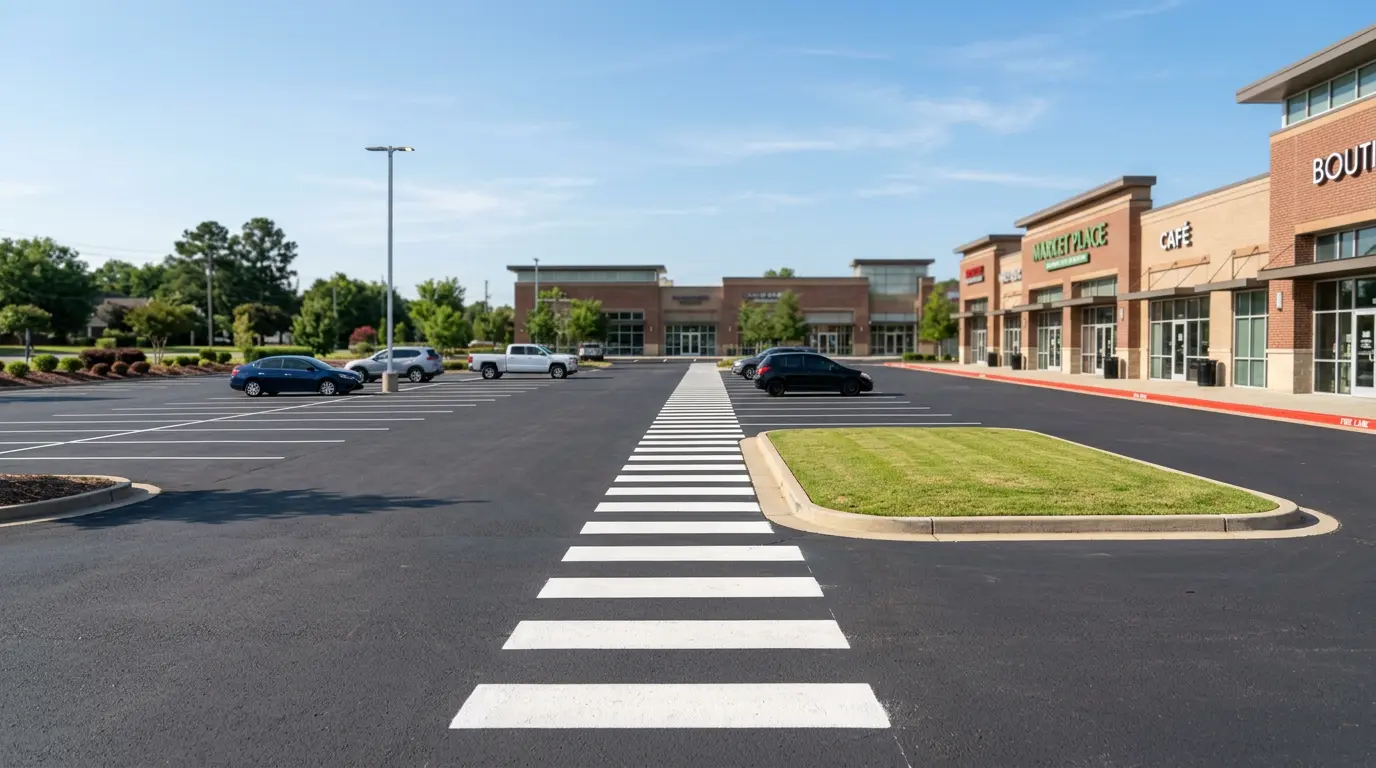
- Parking areas – lots, decks, and overflow
Important to note—the federal standard may not directly apply here, but local jurisdictions can set their own rules.
Using MUTCD-Style Signs
Using the design framework set by the MUTCD streamlines the sign selection process for you and your property.
Consistent Signage
With familiar MUTCD signs, it’s easier for drivers and visitors to comply with your property rules. This can reduce overhead costs of time, money, and labor during enforcement. The MUTCD Pedestrian Crossing Sign at private crosswalks, for example, demands less guesswork from drivers.
Local Code Compliance
Often, using MUTCD-style signs is still the best choice on your private property. Even where MUTCD signage rules don’t apply, establishing a fire lane is essential for the well-being and safety of the people on your property. Local regulations typically require a version of this signage.
Liability
For most private properties, the MUTCD doesn’t set sign standards. But if you completely change the color, shape, symbol, or wording of an MUTCD sign, that can expose you to liability. Posting a Stop Sign that’s yellow or a red Pedestrian Crossing Sign will confuse drivers and likely increase traffic incidents. Even when MUTCD signs aren’t required, sticking close to their designs easily shows your commitment to safety.
Avoiding Common Sign Mistakes
When you set up traffic signs on private property, there’s a lot to make sure is right. If you follow MUTCD and local regulations, it’s easy to make sure your sign is compliant. For example, when you purchase a 24”x6” Street Name Sign, you’ve chosen:
- The best dimensions for letter height and the street name
- An MUTCD-compliant background, not a non-standard color
- Reflective sheeting for nighttime visibility, not a non-reflective sign
- Lettering, font, and layout meet local code.
FAQs
Does the MUTCD apply to my parking lot?
Not directly. MUTCD-style signs can be required by local codes, but they might allow a degree of flexibility to modify those signs.
What about in my gated community?
The MUTCD doesn’t apply to any gated with private-only access, residential, commercial, or otherwise. Local codes do often give guidance about signage.
Do I need a permit to install traffic signs on my property?
No, typically there’s no need for one. Local regulations often require MUTCD signs when a road on your property meets a public road.
Can I customize a sign?
Although the MUTCD doesn’t address this directly, state and local guidance can set limits on sign modifications.
Are MUTCD signs on private property enforceable?
It depends. For a No Parking and Tow Away Zone sign assembly, for instance, the messaging provides drivers sufficient notice to enforce your parking policies. This is often supported by codes in state or local legislation.
How the MUTCD Helps You
The MUTCD describes traffic sign systems on public roads, but it also provides a framework for private property signage. Matching the sign color and shape to its message, using reflective aluminum signs, and sticking to standard colors are all best practices. Use the MUTCD as a guide for traffic sign design, compliance, and, most importantly, safety.