Regulatory vs. Warning vs. Guide Signs: What’s the Difference?
Published · Updated
Introduction
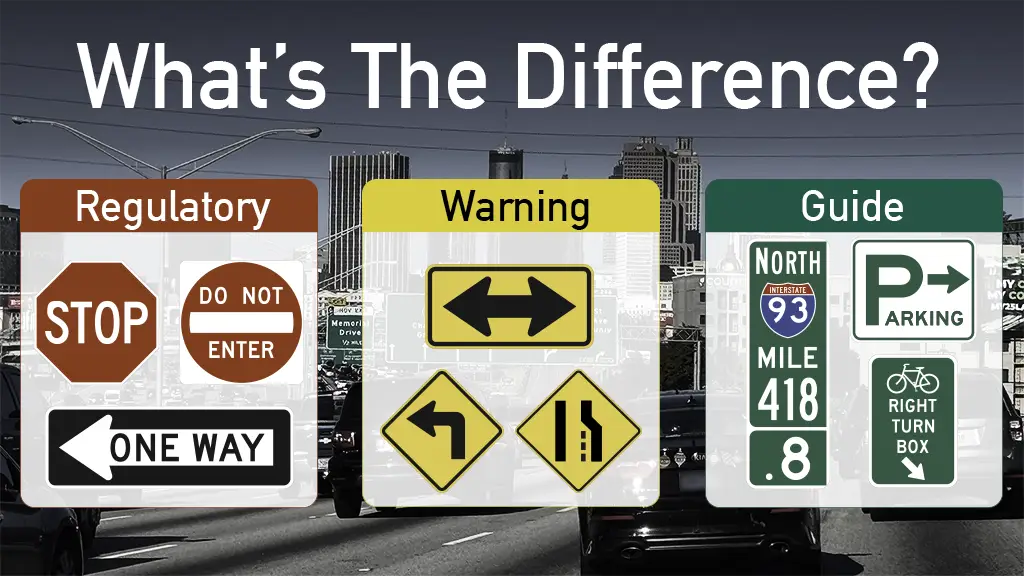
There are many considerations and decisions to make on the road—standardized signs make all the difference in keeping you and others safe. Most signs can be categorized into three types of traffic signs: regulatory, warning, and guide signs. It’s important to understand which category any sign falls under and what their common uses are.
Regulatory Signs – Rules That Must Be Followed
Regulatory Signs tell drivers the rules of the road that they’re traveling through. The typical sign has black text printed onto a white background. Red is used for the signs that deal with prohibited actions and give direct instructions on stops, yields, do not enter, and wrong ways. The rules listed on these signs are typically legally enforceable, and violations may result in being ticketed, fined, or penalized in other ways.
As a fundamental type of signage, regulatory signs are essential to managing traffic flow both within cities and in rural areas. At one intersection, the following signs can be used to create a safe traffic flow: a One-Way Sign shows the direction of the intersecting road’s traffic, a Turn Prohibited Sign informs drivers that a turn cannot be made toward the indicated direction onto the one-way road, and a Do Not Enter Sign reinforces the messaging on both signs to help prevent head-on collisions.
Warning Signs – Hazards & Conditions Ahead
Warning Signs let drivers know of potential risks they might encounter up the road. These signs are commonly diamond-shaped and always yellow in color, with the option to substitute yellow with fluorescent yellow-green. The black border highlights the black text and symbols while providing maximum contrast. Because sign messaging is advisory in nature, direct enforcement isn’t possible. However, it’s still important to post these informational signs so that drivers can predict the upcoming road conditions and also prepare to respond to roadway hazards that may make travel dangerous.
Signs in this category cover a wide range of use cases, such as when a traffic control device is ahead (Signal Ahead), when pedestrians will likely be present in or along the roadway (Pedestrian Crossing), and when the condition of the road itself has changed (Slippery When Wet). When the geometry of the road changes shape, such as with an unexpected sharp right turn, a lower speed limit may be temporarily put in place as well (Turn Right With Speed Limit)
Guide Signs – Navigation & Information
Guide Signs give drivers the navigational information for them to find their way to their destination. Signs that provide this guidance come in three standard colors: green, blue, and brown. Green signs help drivers know where they are by naming roads, exits, and cities on their travels. Blue signs mark services, such as gas stations and rest areas, while brown signs mark recreational areas, such as national parks and marinas. Standardized symbols create signage that is clear and unmistakable, no matter where you may find yourself, whether on the road or on-site in person.
Frequently Asked Questions
What are the differences among regulatory, warning, and guide signs?
The two primary differences among signs are their appearance and use. The general similarity of sign appearances within each category makes interpretation at a glance easier.
Do signs on privately owned property have to comply with MUTCD guidelines?
Typically, compliance with the MUTCD on private roads and property is not required. However, many property owners choose to modify standard MUTCD designs and adapt them to their specific needs.