When Should “Shoulder Work” Signs Be Used?
Published
Introduction
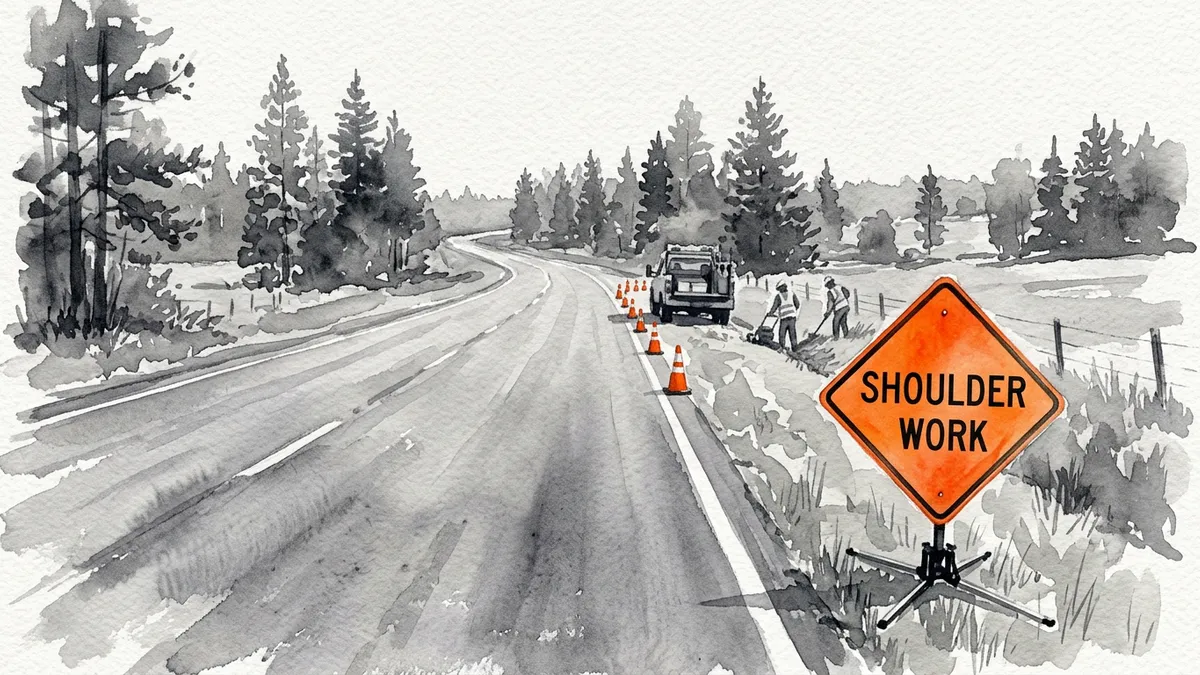
Shoulder Work Signs warn drivers of active work on the right or left shoulder. The MUTCD states that these signs warn of maintenance, reconstruction, or utility operations on the shoulder. The W21-5 series includes:
- Shoulder Work (W21-5)
- Right or Left Shoulder Closed (W21-5a)
- Right or Left Shoulder Closed, XX FT or AHEAD (W21-5b)
Shoulder work generally causes little or no interruption to traffic. The highway shoulder may be closed, but the roadway remains unobstructed (6H.22).
What Types of Work Use These Signs?
We offer Shoulder Work Signs as aluminum or roll-up signs, and crews set them up as they perform:
Roadside maintenance
- Mowing operations
- Shoulder grading
- Ditch work
- Guardrail repair
Utility and infrastructure work
- Fiber optic installation
- Directional boring
- Utility locating
- Roadside communications work
Short-duration roadside operations
- Sign installation
- Drainage maintenance
- Pole or utility service work
How Shoulder Work Differs from Lane Closures
Work crews are often present on roadsides but don’t fully occupy a travel lane. In this case, a Shoulder Work Sign provides plenty of advance warning.
In contrast, sometimes road work, such as repaving or striping, requires a complete lane closure. A Right Lane Closed Ahead Sign or Left Lane Ends Symbol Sign best represents the change in available travel lanes. See all Lane Closed Signs.
Where Shoulder Work Signs Should Be Placed
For advance warning areas, sign placement depends on several factors (6B.04). For Shoulder Work Signs, some general considerations include:
- Roadway speed
- The higher the travel speed, the more advance warning needed
- Shoulder width
- When a paved shoulder 8 ft. wide or wider is closed, at least one advance warning sign is required (6N.06)
- Visibility
- Drivers should clearly see signs on the left or right side of the road
- Distance from traffic
- TTC is generally not needed when work stays 15 ft. or more from the edge of the travel lane, unless vehicles are parked on the shoulder or equipment crosses the road (6N.05)
Conclusion
When road crews perform shoulder maintenance, Shoulder Work Signs guide drivers safely through the work zone. Cones, channelizer drums, and other TTC devices help delineate the open travel way and shoulder. These signs warn drivers of roadside activity well ahead of time, which is especially important when utility or road work is underway on high-speed roads.