When Should “Utility Work Ahead” Signs Be Used?
Published
Introduction
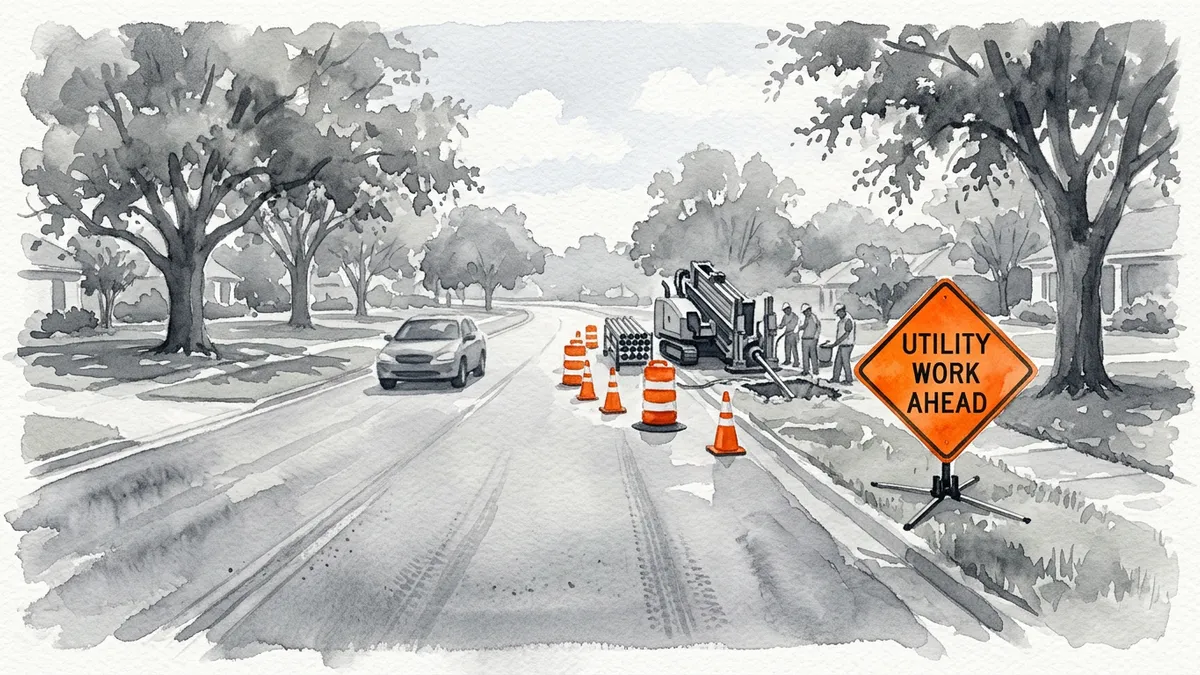
Water, gas, electricity, internet—utility work is a key part in maintaining these services. This infrastructure can run through and under urban and rural roadways, shoulders, and roadsides. Installing, maintaining, and servicing utility lines can interrupt traffic, so a Utility Work Sign (W21-7) will give drivers advance warning.
Utility Work Signs as Advance Warning
The standard Road Work Sign (W20-1) is still a compliant advance warning sign, but the MUTCD allows the Utility Work Sign to take its place (6H.24). Adding a distance legend is optional, with AHEAD being the most popular choice. Distance can also be shown in FT or MILES.
What Types of Work Use Utility Work Ahead Signs?
Advance warning protects both drivers and workers as they operate heavy equipment on or near the roadway.
Underground utility work
- Water main repairs – restoring regular water services
- Sewer line installation – constructing a connection to existing lines
- Gas line work – inspecting, servicing, or replacing gas mains
- Underground electrical service – installing and servicing underground power lines
Fiber optic and telecommunications work
- Fiber optic installation – laying fiber optic cables for high-speed internet and phone service
- Telecom utility construction – laying down new telecommunication lines
- Conduit placement – installing protective pipe to enclose electrical or fiber cables
- Roadside unit (RSU) servicing – mounting devices that broadcast travel information to vehicles
Directional boring operations
- Underground directional drilling/boring – drilling a path for utility line installation
- Roadside bore pits – establishing a location to set up boring machines
- Shoulder excavation for utility crossings – setting a starting point for under-road boring operations
Overhead utility work
- Power line maintenance – inspecting, maintaining, or repairing power lines
- Pole replacement – installing new poles and connecting them to the grid
- Traffic light post installation – creating a new signalized intersection or replacing existing posts
Custom Variations to Utility Work Signs
To best describe road conditions, the MUTCD allows custom wording for Work Zone Signs (6H.38). That’s only possible when engineering judgment decides it’s needed. Like other TTC signs, custom Utility Work Signs must have an orange background, a black legend, and a black border. The wording added must be “brief, legible, and clear.”
We offer Utility Work Signs variations as Roll-Up Signs, including:
Beyond our web catalog, we can add custom wording to aluminum or roll-up signs:
- Fiber Optic Crew Ahead
Common TTC Signs Paired with Utility Work Signs
Like Road Work Ahead Signs, Utility Work Ahead Signs can lead a temporary traffic control (TTC) sign series. Other TTC signs and devices often used with Utility Work Ahead Signs include:
State and Local Requirements
Checking with state and local regulations is key before setting up any utility work zone signs. Traffic agencies may require the following in order to perform roadside utility work:
- Approved TTC plans
- Specific sign sequences
- Right-of-way or lane closure permits
- Fluorescent orange signs
For night work or overnight signage, Utility Work Signs must be retroreflective or illuminated (6N.01). Advance warning is crucial to minimize driver exposure to bore pits, shoulder drop-offs, and other utility work zone hazards.
Conclusion
Utility Work Ahead Signs provide advance warning when utility work is underway. This standard wording can be used, or what works instead are custom fiber optic construction signs, directional boring traffic signs, telecom utility work signs, or underground utility work signs.