What Signs Are Used for Detours?
Published
Introduction
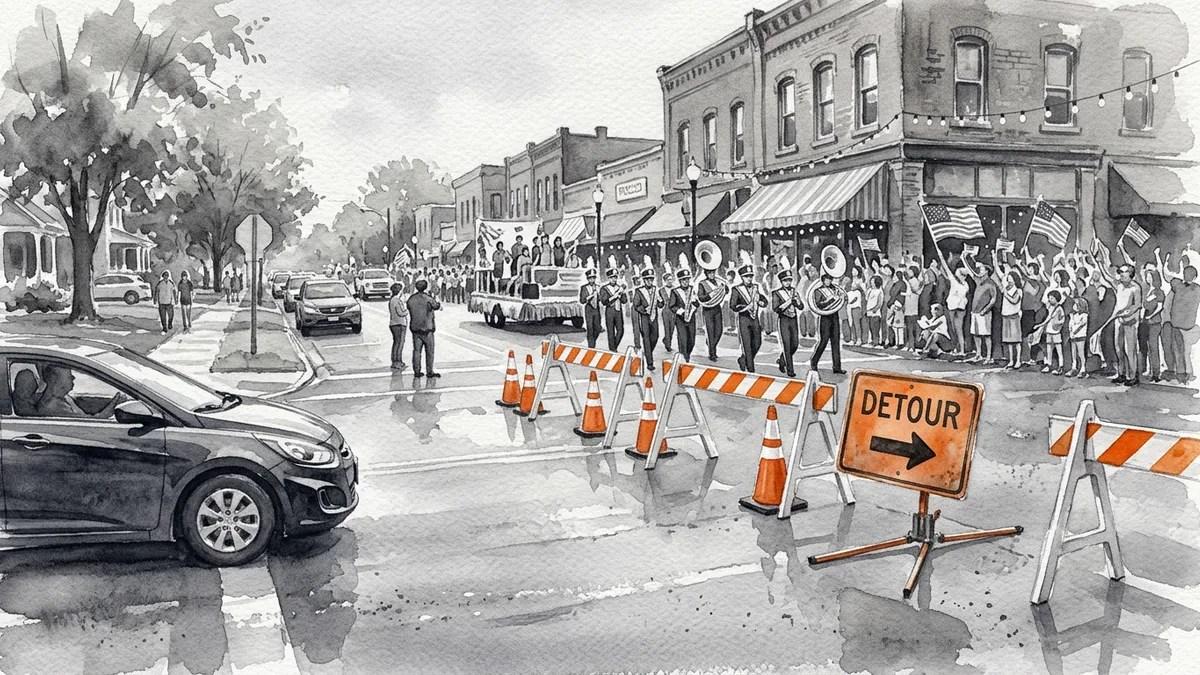
Construction work, utility work, emergencies, and special events can fully close a road, or one direction of a road. That’s when Detour Signs are set up to lead traffic around those closures. The MUTCD defines a detour as a temporary rerouting of road users onto an existing highway. Detours are set up to avoid temporary traffic control (TTC) zones like the ones above (6B.09).
What Signs Are Commonly Used for Detours?
Detour Signs guide drivers, bicyclists, and pedestrians through a detour and back to the original road (6B.09). Even when signage is temporary, it should be clear and easy for travelers to follow.
Detour Signs cover several related uses, as outlined in Section 6I.02 of the MUTCD.
To warn drivers that a detour is ahead
- Road Work Ahead Sign – often placed before Detour Signs
- Detour Ahead Sign – can show a distance in ft. or miles, such as 500 FT and 1 MILE (6H.04)
To point toward the start of a detour
To guide travelers along the detour route
- M4-9 Series
- M4-9 Detour Sign – a street name sign should be mounted above it, or the street name added to the sign (6I.02)
- M4-9a Pedestrian/Bicyclist Detour Sign
- M4-9b Pedestrian Detour Sign
- M4-9c Bicyclist Detour Sign
To identify a detour through a numbered route
- M4-8P Detour Plaque – mounted above a route sign
To show that the detour has ended
What Situations Require Detours?
Rerouting travel around TTC zones protects worker and traveler safety, especially when the following types of work are underway.
Road Construction
Detour routes are set up when the road itself isn’t suitable for vehicle use.
- Bridge replacement
- Roadway reconstruction
- Paving operations
Utility Projects
Detours keep travelers clear when utility pipes and connections are exposed on narrow roads.
- Water main installation
- Fiber optic trenching
- Open-cut crossings
Emergencies
Detour routes are established when traffic can’t continue safely.
- Crashes
- Storm damage
- Sinkholes
- Roadway failures
Agencies often use fluorescent pink Detour Signs here, a color used for incident management (6I.02).
Special Events
Planned events can close roads or lanes for several hours or days.
- Parades
- Running and cycling events
- Festivals and street fairs
Where Detour Signs Are Placed
When deciding on Detour Sign placement, aim for consistent, highly visible signage that gives travelers the right information at the right time.
As travelers approach a detour route, consider what they need to know:
- Notify them that a detour is ahead
- Direct them where to turn at an intersection
- Confirm that they are on the right path
- Let them know when the detour ends
Common TTC Devices Used with Detours
Using a combination of signage and TTC devices builds a safe, effective detour system. The TTC devices usually seen on detours include the following:
- Type 1/Type 2 Barricades – hold signs used along the detour route (6K.07)
- Type 3 Barricades – block the closed road, often holding a Detour Arrow Sign (6K.07)
- Warning Lights – add visibility to barricades and signage (Figure 6P-20)
- Pedestrian Channelizers – guide pedestrians through the detour and must be detectable to people using long canes (6K.02)
State and Local Considerations
Traffic agencies adapt MUTCD standards for local rules on road closures, detour route setup, and sign selection.
- Permitting a road closure
- Approving the detour route
- Specifying TTC sign spacing
- Defining permitted barricade types
- Setting sign material and reflectivity standards
Make sure to design your detour to meet your local jurisdiction’s requirements.
Conclusion
Choosing which Detour Signs to use, and where to place them, takes several related considerations into account. Make sure that drivers, bicyclists, and pedestrians know a detour is ahead, and guide them through the detour route with clear, consistent signage that’s visible both day and night.