What Signs Are Used for Temporary Traffic Control in Work Zones?
Published
Introduction
Contractors, developers, and municipalities use temporary traffic control signs, or TTC signs, to warn drivers and pedestrians about temporary road hazards. TTC signs communicate a change in traffic flow when construction, maintenance, or utility work is underway.
What the MUTCD Says
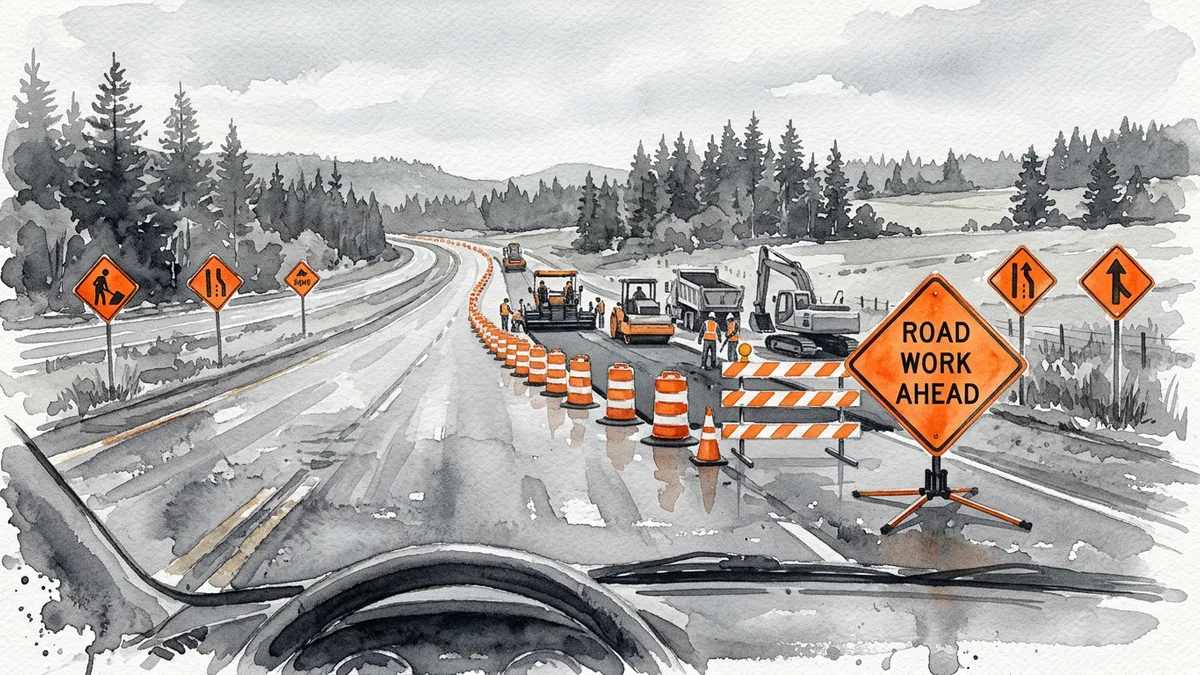
Part 6 in the MUTCD covers temporary traffic control. Work Zone Signs includes a selection of regulatory, warning, and guide signs (6F.01, 01). Orange diamond signs with a black legend and border make up the majority of Work Zone Signs (6H.01, 04).
Most Common Work Zone Signs
TTC signs should closely describe the change in traffic conditions ahead. The table below, based on Section 6H of the MUTCD, outlines the most common Work Zone Signs and their uses.
| Purpose | SKU # | Sign Name | How They’re Used |
|---|---|---|---|
| General information | W20-1 | Road Work Ahead | To alert drivers to road work farther down the road |
| W21-7 | Utility Work Ahead | To warn drivers of utility work or maintenance being performed ahead | |
| W21-8 | Mowing Ahead | To let drivers know mowing is being performed on grassy roadsides | |
| Traffic flow change | W20-5R | Right Lane Closed Ahead | To prepare drivers on a multi-lane road to merge to the left |
| W20-4 | One Lane Road Ahead | To indicate when only one lane is available for two directions of traffic | |
| Workers present | W20-7A | Flagger Ahead | To warn drivers that traffic will be controlled by a flagger |
| W21-1A | Workers Symbol | To communicate that workers are present in the roadway or on roadsides | |
| Travel path change | W20-2 | Detour Ahead | To make drivers aware that the regular travel path will be rerouted |
| W20-3 | Road Closed Ahead | To warn drivers of a road closure where access is fully restricted or limited only to local traffic | |
| Plaques (Warning Signs) | W16-2CP-500 | Distance Plaques | To represent the distance between the sign and the change in road condition |
| W13-1CP | Advisory Speed Plaques | To set a recommended speed within a work zone |
Advance Warning Sign Placement
Section 6H.02 breaks down how Advance Warning Signs are ordered. When a series of signs are needed, effective placement starts with general information signage, followed up with more specific instructional signage:
- Road Work Ahead Sign
- Right Lane Closed Ahead Sign
- Lane Ends Symbol Sign (W4-2)
An End Road Work Sign (G20-2) lets drivers know they’ve reached the end of the work zone.
What About TTC Devices?
Temporary traffic control devices, such as Channelizer Drums, Barricades, and Traffic Cones, greatly support work zone sign messaging. Their physical presence creates a boundary around a work zone while guiding vehicle access around the closed lane, shoulder, or road.
Temporary Traffic Control on Private Property
Public roadways aren’t the only place where traffic flow needs to be modified. If private roads are open to the public, MUTCD rules must be followed (6A.01). TTC signs should be used for projects including:
- Parking lot maintenance
- Pavement repairs
- Housing developments
- Warehouse operations
Within private properties, Roll-Up Signs can be easily set up and taken down.
Materials and Reflectivity
For work zone signs, MUTCD guidance makes three important notes:
- Signs can be made with rigid or flexible materials, which includes aluminum and roll-up signs (6F.01, 14)
- Orange reflective sheeting can be substituted with more-visible fluorescent orange (6F.01, 02)
- Any sign used at night must be retroreflective or illuminated for visibility (6F.01, 11)
These guidelines on sign material and reflectivity ensure that work zone signs stand out in any light condition, especially at night.
State and Local Requirements
Federal guidance via the MUTCD provides the foundation for state and local traffic agency requirements. Check with your jurisdiction before installing signs—a permit and traffic control plan may be required. They often regulate TTC sign messaging, sizing, materials, and placement.
Conclusion
Proper use of work zone warning signs is essential so that drivers know what to expect down the road. Make sure to warn drivers of road conditions early by using the right signs well in advance of—and within—the work zone for consistent, clear guidance.