Flat Blade vs. Extruded Street Name Signs: What’s the Difference?
Published
Introduction
No matter the blade style, the Street Name Signs drivers see at night appear one and the same. Both flat and extruded blades are made of rustproof aluminum and use the same reflective sheeting. What’s different between the two is their form, their rigidity, and many of their common uses.
How to Choose Between the Sign Styles
For Street Name Signs, the MUTCD sets clear rules for their lettering, color, and reflectivity. What it doesn’t specify is the blade material or profile. Many cities and counties specify only one style, so make sure to check their sign standards before buying. On fully private roads, the choice is usually left to the owner.
About Flat Blade Street Name Signs
Our Street Name Signs use .080” aluminum with radius corners, measure 18 to 48 inches wide, and use reflective sheeting on both sides. Thicker gauge aluminum is available on request. What makes flat blade signs a popular choice are their distinct characteristics:
- Economical – a cost-effective option
- Lightweight – easy to maneuver and transport
- Simple appearance – has a streamlined profile
Flat blade signs are the most common style for Street Name Signs, used widely but especially on residential streets.
About Extruded Street Name Signs
What Are Extruded Blades?
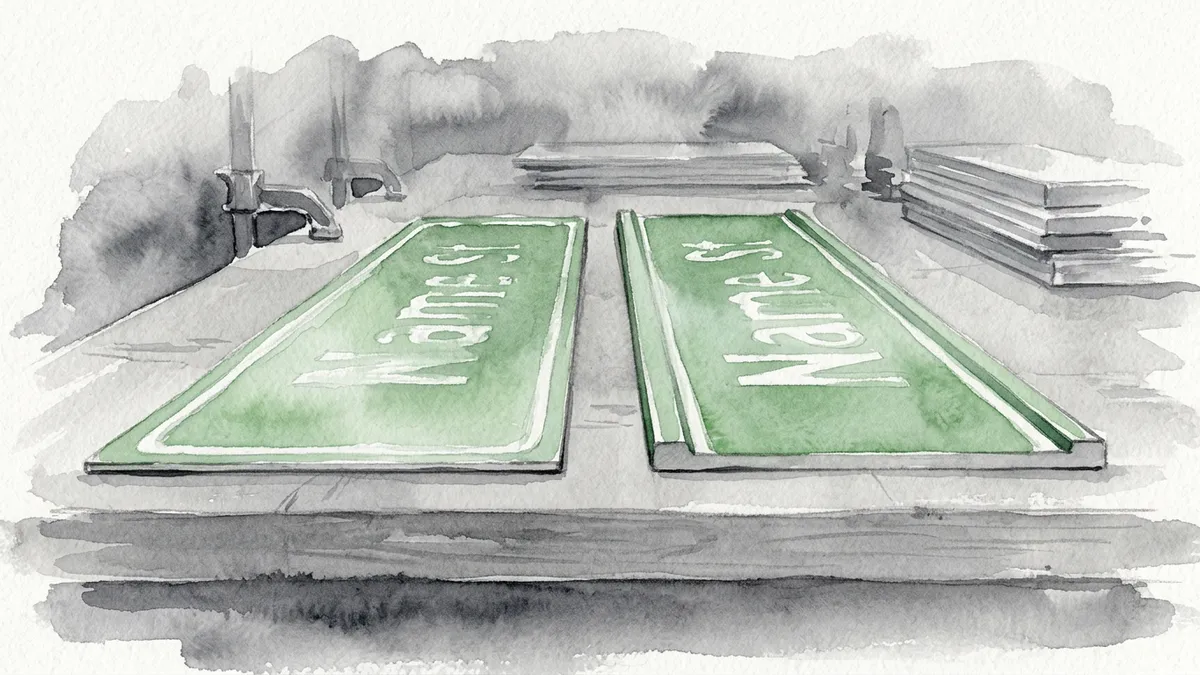
When manufacturing extruded blades, the aluminum used is pushed through a shaped die. The ribs along the top and bottom aren’t added on later. Instead, the entire extruded blade is formed in one piece.
Extruded Blades and Their Advantages
A flat blade Street Name Sign may be a common choice, but upgrading to the extruded blade improves several qualities. The ribs contribute greatly to the benefits that an extruded profile brings:
- Increased rigidity – made with thicker aluminum
- Reduced flexing – especially important for longer blades
- Upgraded appearance – adds subtle visual interest to signs
Overall, extruded blades are more rigid and resist bending better than flat blades. When you need a stiffer blade, we offer extruded Street Name Signs on request. Contact us for a quote.
What’s the Same Across the Two Styles
The two Street Name Sign styles have contrasting features, but are similar in many ways. Both sign styles can be designed with:
- Standard letter heights in mixed case
- Block numbers
- Logos, where they’re allowed
When it comes to reflective sheeting, flat and extruded blades can hold:
- High-intensity prismatic (HIP) sheeting
- Full-cube prismatic (FCP) sheeting
- Anti-graffiti overlaminate – included on our Street Name Signs at no extra charge
Besides their aluminum form, flat and extruded Street Name Signs are identical in all other ways. Because the MUTCD doesn’t set rules for blade material, both styles can meet the same MUTCD rules for lettering and logos (2D.45) and retroreflectivity (2A.22).
| Feature | Flat Blade | Extruded |
|---|---|---|
| Material | .080” flat aluminum (thicker on request) | Extruded aluminum with top and bottom ribs |
| Rigidity | Good | Higher; resists flexing and bending |
| Weight | Lighter | Heavier |
| Cost | Lower | Higher |
| Best for | Residential streets, shorter blades, low-wind areas | Long blades, busy roads, windy or coastal areas, overhead signs |
| Sheeting and lettering | Same MUTCD rules | Same MUTCD rules |
Wind Performance
Like all traffic signs, Street Name Signs are exposed to wind, weather, sun, and turbulence from passing traffic over many years. When looking for wind-resistant street signs, consider how each sign style excels in different use cases.
When to Use Flat Blade Signs
In most cases, flat blade signs provide all the wind resistance that’s needed. When you balance cost-effectiveness with wind performance, flat blades work best for:
- Lower-speed roadways
- Local residential roads
- Low-wind climates
- Shorter blades, up to about 36 inches wide
When Extruded Signs Are Best
Because of their increased rigidity, extruded signs perform much better in high winds. This blade style is an excellent choice for:
Mounting Locations
- Longer sign blades – reduces flexing in the wind
- Light and utility pole mounting – stays flat, especially for long blades
- Overhead mounting – better for signs on mast arms or span wire
Road and Weather Conditions
- Windier climates – performs well in high, frequent winds
- Major roadways – resists turbulence from higher-speed traffic
- Coastal areas – holds up to strong winds and storms
What You’ll Need to Mount Signs
Long street names often require the use of wider 36-inch or 48-inch blades. Those wider blades catch more wind, so in windy areas or on busy roads, an extruded blade is worth considering. Other considerations you’ll need to make before ordering are:
- Choosing the right blade height for the lettering size you’re using (see What Size Should a Street Name Sign Be?)
- Selecting a Round, Square, or U-Channel Post and Street Name Sign Brackets for post-mounting
- For mast arms or span wire, choose from our Overhead Sign Brackets
- For light and utility poles, use wing brackets with stainless steel banding
For long post-mounted blades, our H-1200 bracket has a 12-inch slot that holds the sign more securely than a standard 5.5-inch slot. For mounting heights and offsets, see Where Should Street Name Signs Be Installed?
Frequently Asked Questions
Does the MUTCD require extruded street name signs?
No. The MUTCD sets rules for lettering, color, and reflectivity, not blade material. Some cities and counties require extruded signs in their own sign standards.
Are extruded street name signs worth the extra cost?
For long blades, windy or coastal areas, busy roads, and overhead signs, often yes. For shorter blades on quiet residential streets, a flat blade is usually enough.
Conclusion
Local jurisdictions and owners take street name length, environmental conditions, and project costs into account when they choose flat blade vs. extruded Street Name Signs. Flat blade signs are the standard option, but extruded signs become a top choice when you need rigid, more wind-resistant signs. Design flat blade signs in our custom street sign builder, see our Street Name Sign FAQ, or contact us for extruded Street Name Signs. For more, see Custom Street Name Signs for HOAs, Neighborhoods, and Private Roads.