When Should You Use a Standard MUTCD Sign vs. a Custom Sign?
Published
Introduction
In many cases, public and private roads require standard MUTCD signs. In others, custom signs best describe unique road conditions or rules on private property. Which choice should be made, and when do you know it’s the right one? We’ll take a look at what the MUTCD says as you weigh these two options.
What the MUTCD Says
Chapter 1B outlines the legal requirements for traffic control devices. Section 1B.01 sets the national standard on when the MUTCD does apply and when it doesn’t.
In general, the MUTCD applies to any road open to public travel, whether it is publicly or privately owned. This includes roadways within schools, universities, and government office complexes, as well as:
- Business – shopping centers and office parks
- Travel – airports, bus stations, and train stations
- Recreation – sports arenas, sports complexes, and marinas
Most roadways must meet MUTCD traffic sign standards. However, for these specific locations, the MUTCD doesn’t apply:
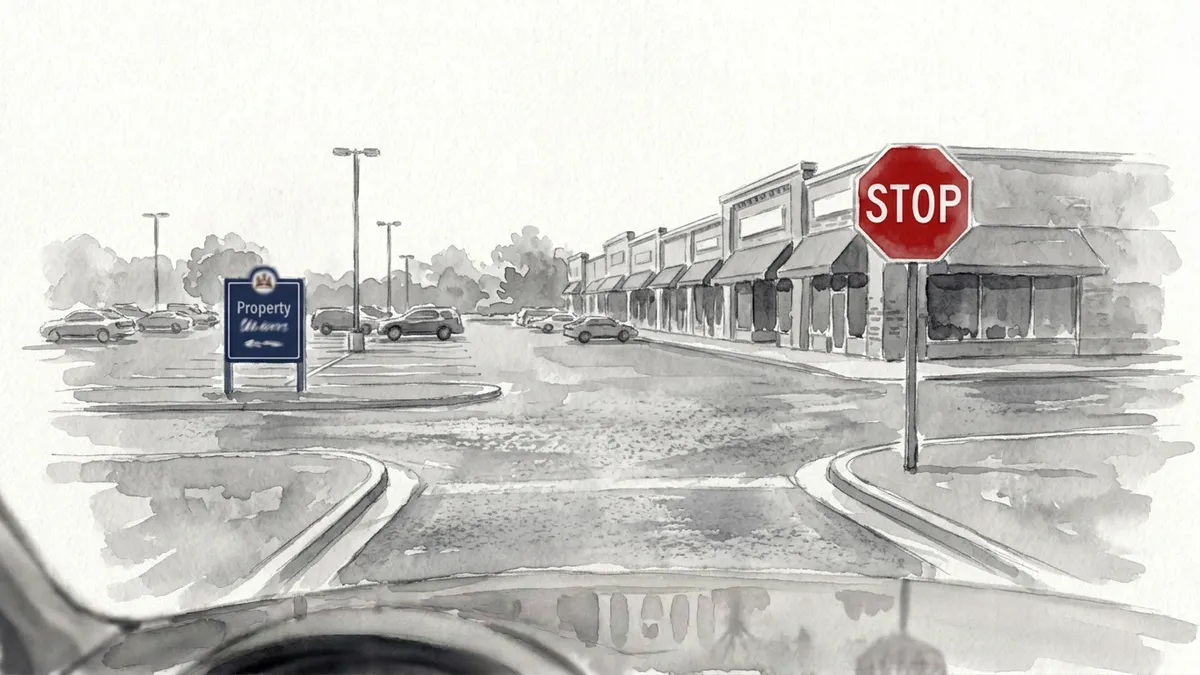
- Parking areas and their driving aisles, public and private
- Private gated properties closed to the public at all times
For more on how this affects private property, see The MUTCD and You: What Every Property Owner Needs to Know.
When a Standard MUTCD Sign Is the Best Choice
Standard MUTCD signs are easily recognized, familiar, and show a clear message. On public roads and private roads open to the public, where the MUTCD has a standard sign for a situation, that standard sign must be used (2A.04). Even in parking areas and gated private properties, where the MUTCD doesn’t apply, these standard signs are best used as-is:
- R1-1 Stop Signs and R1-2 Yield Signs
- R2-1 Speed Limit Signs
- R6-1 / R6-2 One-Way Signs
- W11-2 Pedestrian Crossing Signs
State and local agencies can develop supplements to the MUTCD (1B.02). Those rules generally specify exactly how and where standard signs are used, but they must stay in substantial conformance with the national MUTCD.
When a Custom Sign Makes More Sense
Custom signs fit best when you need to communicate property-specific information. Signs with property-specific messages, branding, or logos belong where the MUTCD doesn’t apply, such as parking areas. Some examples of those custom signs include:
- Visitor Parking Signs
- Delivery Entrance Signs
- Building, Department, or Dock Direction Signs
- Tenant Parking Rules Signs
In addition, the MUTCD allows state and local agencies and private site owners to develop special word legend signs. Engineering judgment might determine that drivers need specific information on road conditions or navigation through a private property, such as a shopping center (2A.04). These custom signs must still use the standard shape and colors for their sign type, such as a black on yellow diamond for a warning.
Conclusion
When choosing between a MUTCD sign and custom sign, there are two considerations to make: where the sign goes and if there’s already a standard sign that fits. In general, custom signs are best for parking areas, gated properties, and site-specific information, while standard signs are for roads open to all public travel. Ready to design one? Start with our custom traffic signs or browse property signs.