When Should “Road Closed” Signs Be Used?
Published
Introduction
When drivers approach a road closure, they’ll know that their usual route isn’t available. Construction, utility work, emergencies, or hazards can make a road unsafe for traffic to pass through.
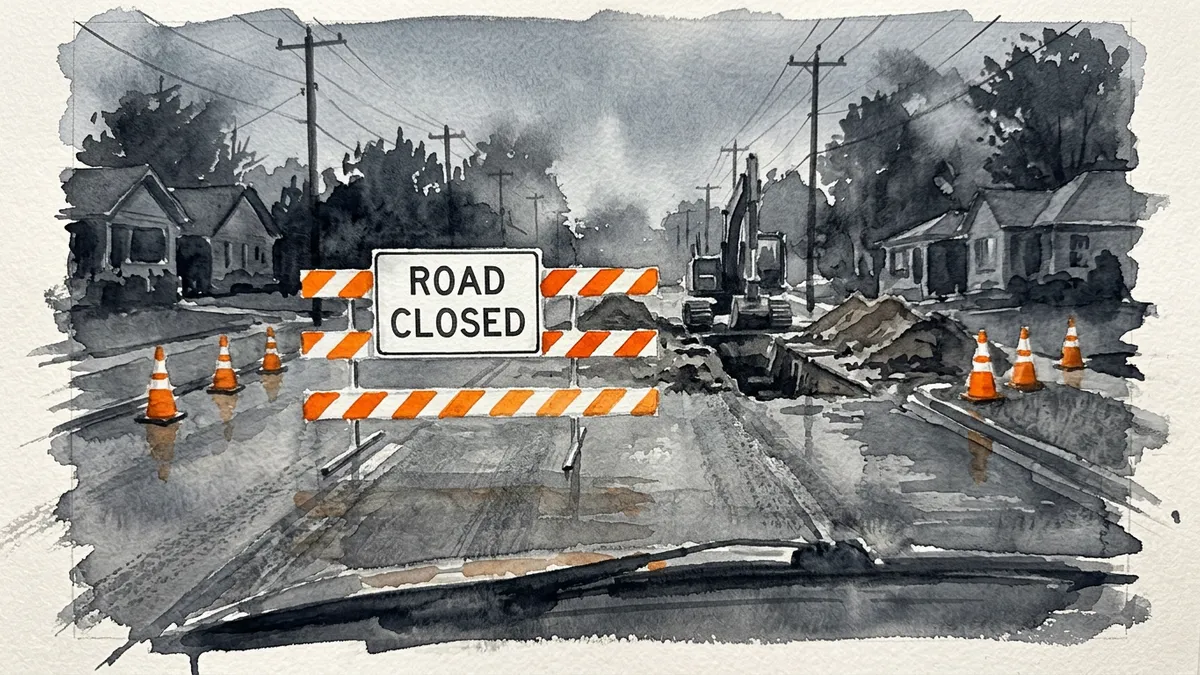
In those situations, any local road, highway, or interstate can be closed to traffic. That’s when the R11-2 Road Closed Sign should be used. The MUTCD recommends it when a road is closed to all traffic except contractor equipment or officially authorized vehicles (6G.04).
What Counts as a “Road Closed” Sign?
The R11-2 Road Closed Sign is the standard option in this category. However, there are several variations to Road Closed Signs, and choosing one depends on how well it matches the situation at hand.
When drivers need advance notice of a temporary road closure
The “AHEAD” distance legend can be replaced with XX FEET or XX MILES (6H.05).
When basic, straightforward messaging at the closure point is plenty
When a variation of basic messaging best matches the closure type
- R11-2a Street Closed Sign
- R11-2b Bridge Out Sign
- R11-2c Path Closed Sign
When only local traffic is allowed to enter the closed road
- R11-3 Road Closed XX Miles Ahead, Local Traffic Only Sign
- R11-3a Street Closed, Local Traffic Only Sign
- R11-3b Bridge Out, Local Traffic Only Sign
- R11-4 Road Closed To Thru Traffic Sign
“Road Closed” Regulatory Signs
Most TTC Warning Signs, such as Road Closed Ahead, use an orange, diamond-shaped sign. Although they’re used in work zones, Road Closed Signs aren’t orange. They’re TTC regulatory signs, designed as a white rectangle with a black legend and border. Even for temporary use, all TTC regulatory signs must be authorized by the agency or official in charge of the road (6G.01).
Supporting Signs and Devices
Detour Signs
Detour Signs reroute drivers away from the closed road. The MUTCD notes that warning and detour signs should be used with the R11-2 sign (6G.04).
Temporary Traffic Control (TTC) Devices
The TTC devices below hold the Road Closed Sign and guide traffic toward the detour.
- Type 3 Barricades – close the road and hold a Road Closed Sign (6K.07)
- Channelizer Drums and Traffic Cones – lead traffic toward the detour or around the closure
- Warning Lights – can be mounted onto a Type 3 Barricade (Figure 6K-1)
What Types of Work Commonly Require Road Closures?
Road Construction
Closing a road is best whenever construction makes the road itself unsafe to drive over.
- Bridge replacement
- Roadway reconstruction
- Full-depth pavement repair
Utility Work
Some utility jobs need the full width of the road, especially on narrow roads or when work cuts through the whole road.
- Water main replacement
- Sewer installation
- Open-cut trenches
Emergency Situations
Roads are occasionally closed for major emergencies to protect drivers from immediate harm.
- Storm damage
- Sinkholes
- Flooding
- Damaged bridges
At a damaged bridge, the R11-2b Bridge Out Sign can take the place of a Road Closed Sign (6G.04).
How Road Closed Signs Are Set Up
Below are general setups based on MUTCD standards. Each local agency specifies sign selection and placement, so make sure to meet their requirements.
Ahead of the closure
At the last intersection before a closure
- Local Traffic Only (R11-3/R11-4)
At the closure
- Road Closed Sign
- Installed onto or above a Type 3 Barricade (6G.04)
- Placed at or near the center of the road (6G.04)
Closed Roads With Local Traffic Only
A road can be closed to through traffic, but still remain open to local traffic including:
- Residents who always need access to their homes
- Delivery drivers who deliver to businesses and homes
- Employees who work at a company building on the closed road
- Emergency vehicles
Conclusion
For road closures, barricades and signs create a clear, recognizable system that drivers can easily follow. Road Closed Signs, supported by Detour Signs, help drivers steer clear of hazardous conditions on closed roads and reach their destination safely. Place Road Closed Ahead or Local Traffic Only Signs leading up to the Road Closed Sign at the closure.