What Signs Should Be Used at Truck Entrances and Loading Docks?
Published · Updated
Introduction
It’s not uncommon for large commercial facilities to pose a navigational challenge. Managers of warehouses, distribution centers, manufacturing plants, or industrial parks know this best—truck drivers need exact, easy-to-reference signage.
The right selection from the Truck Entrance Signs and Loading Dock Signs you’ll see below will fulfill those signage needs, start to finish.
Truck Entrance Signs
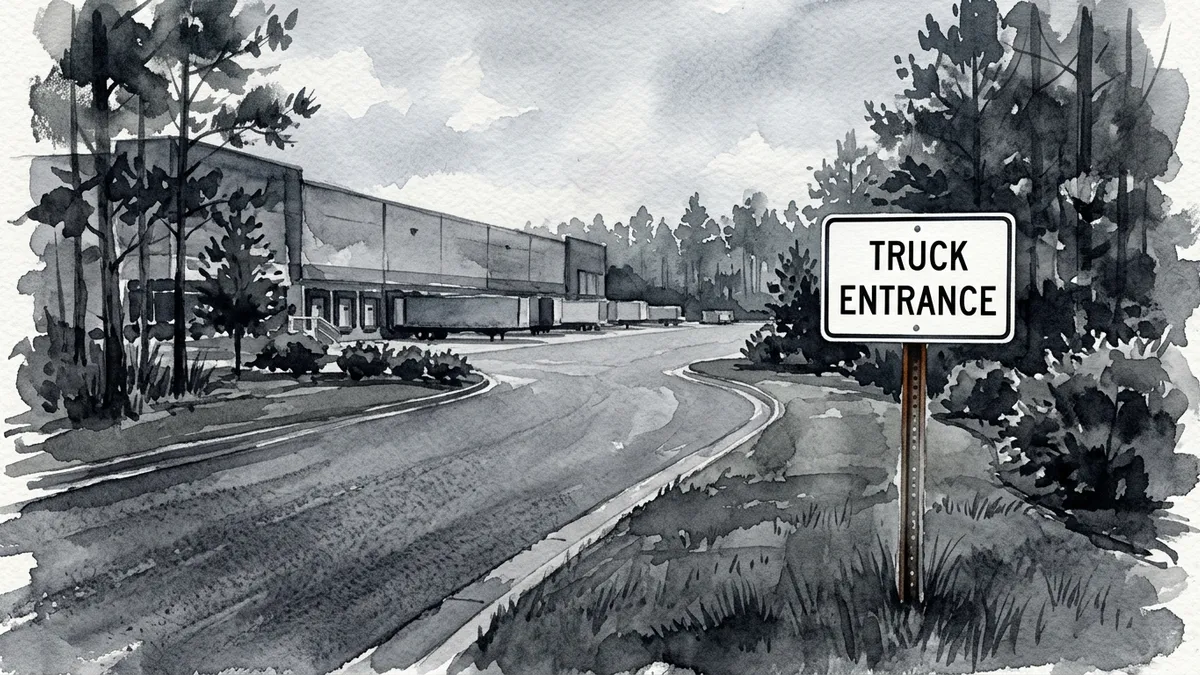
For local delivery trucks, long-haul 18-wheelers, and every truck size in between, Truck Entrance Signs make property navigation simple and stress-free.
| Purpose | Sign Name | How It’s Used | SKU# |
|---|---|---|---|
| Names the entrance type | Truck Entrance | Identifies the correct entrance into the property | PR340 |
| Delivery Entrance | Guides delivery trucks to drop-off and pickup | PR320 | |
| Customer Entrance | Leads customers toward administrative buildings | PR330 | |
| Plant Entrance | Identifies the entrance to an industrial plant | PR200 | |
| Limits truck access | No Trucks Allowed | Restricts trucks from entering the roadway | PR272 |
| No Tractor Trailers | Prohibits oversized trucks from entering | PR273 | |
| Truck Route | Guides trucks through designated routes | R14-1 | |
| Requires safety checks | Weight Limit | Warns that the roadway has a maximum weight it can carry | R12-1 |
| Low Clearance | Warns that trucks taller than the clearance can’t continue | W12-2 | |
| Sets driving rules | Truck Speed Limit | Sets the speed limit for trucks only | R2-2P |
| Truck Crossing | Lets nearby drivers know trucks are likely nearby | W11-10 |
Loading Dock Signs
Clear loading dock signage points delivery truck drivers directly toward their assigned dock, including the signs below.
| Sign Name | How It’s Used | SKU# |
|---|---|---|
| Shipping | To point toward the loading zone | PR27 |
| Receiving | To point toward where deliveries are received | PR28 |
| Shipping and Receiving (Combined) | To mark the inbound and outbound delivery area | PR20 |
| Shipping Hours, Receiving Hours | To make the hours of operation known | PR19 |
| Loading Zone, No Parking | To make sure dock access remains clear | R7-6 |
| Dock Signs | To identify loading docks with numbers or letters | Custom |
| One-Way | To limit travel to only one direction | R6-1 |
| Do Not Enter | To prevent wrong-way truck traffic | R5-1 |
| Exit With Arrow | To lead truck drivers toward the exit | PR21 |
Where to Place Signs
Because trucks are large, heavy vehicles, drivers need guidance early to brake or make turns safely. Having enough advance notice is especially important when facilities are unfamiliar or tricky to navigate.
Typical locations these signs are placed include:
- Property entrances
- Dock approach lanes
- Warehouse side drives
- Employee/customer split areas
Carefully planned loading dock and truck entrance sign placement makes all the difference in driver safety.
Customizations
Section 1B.01 of the MUTCD notes that roadways that are publicly accessible needs standard signage. Within your property, though, modifications that meet local regulations are allowed. You can add any custom message to match your property needs. For example, common additions to Stop Signs include:
Also later noted in Section 2A.04, custom wording is allowed, but that’s as long as the standard shape and color stays the same.
Facility and Municipal Requirements
Local and site regulations are designed to avoid common mistakes that make truck traffic signage unclear, not visible, or otherwise ineffective. These sign rules generally cover the following sign qualities:
- Minimum reflectivity and size – for visibility at night and from a distance
- Appearance and wording – for consistency in property signage
- Placement and spacing – to give drivers plenty of time to react
Conclusion
Finding the correct entrance, route and loading dock should be effortless for truck drivers. Through proper placement of loading dock entrance signs and truck route signs, private property can be as easy to navigate as public roads.