Work Zone Safety Products — MUTCD and MASH Compliant
Rice Signs supplies the full line of work zone safety signs, traffic cones, channelizers, type I, II, and III barricades, roll-up signs, sign stands, and safety vests used in temporary traffic control (TTC) zones on U.S. public roads. Every sign we manufacture meets MUTCD Part 6 requirements for sign size, legend, color, and reflective sheeting, and our crashworthy barricades meet MASH 2016 certification. Whether you are a DOT contractor staging a multi-mile highway project, a utility crew working a single lane closure, or a municipality setting up a sidewalk detour, we ship hundreds of in-stock work zone signs and devices same day from Auburn, Alabama.
What are work zone safety products?
What to Look for When Buying Work Zone Safety Products
- Verify MUTCD and MASH compliance
- Check reflective sheeting grade — High Intensity Prismatic (Type III) or Ultra High Intensity (Type XI)
- Know when to use cones vs. barricades
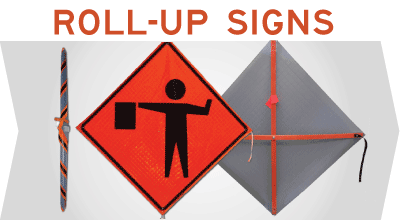
- Consider roll-up signs for mobile crews
- Confirm state DOT bid requirements
- When in doubt, call us
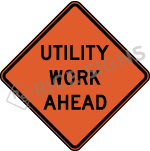
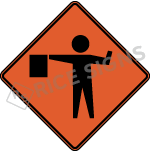 Work Zone Signs
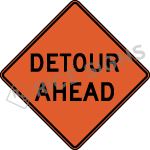
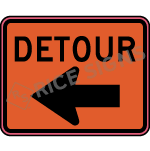
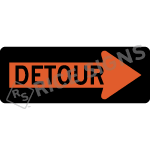 Detour Signs
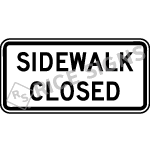 Sidewalk Closed Signs
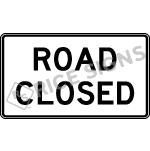
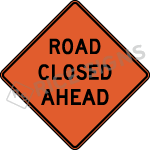
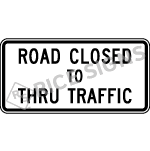 Road Closed Signs
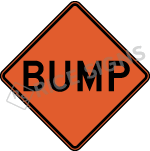
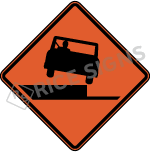
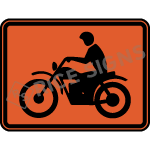 Road Condition Signs
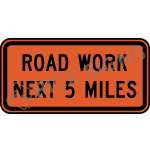
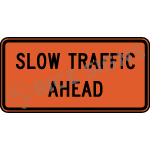
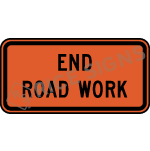 Work Zone Informational Signs
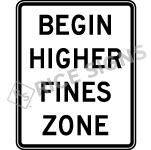
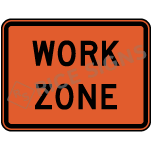
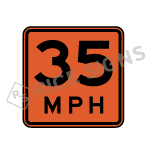 Work Zone Speed Limit Signs
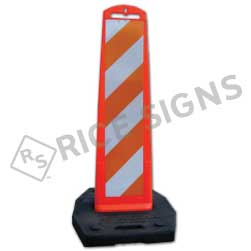 Vertical Panel
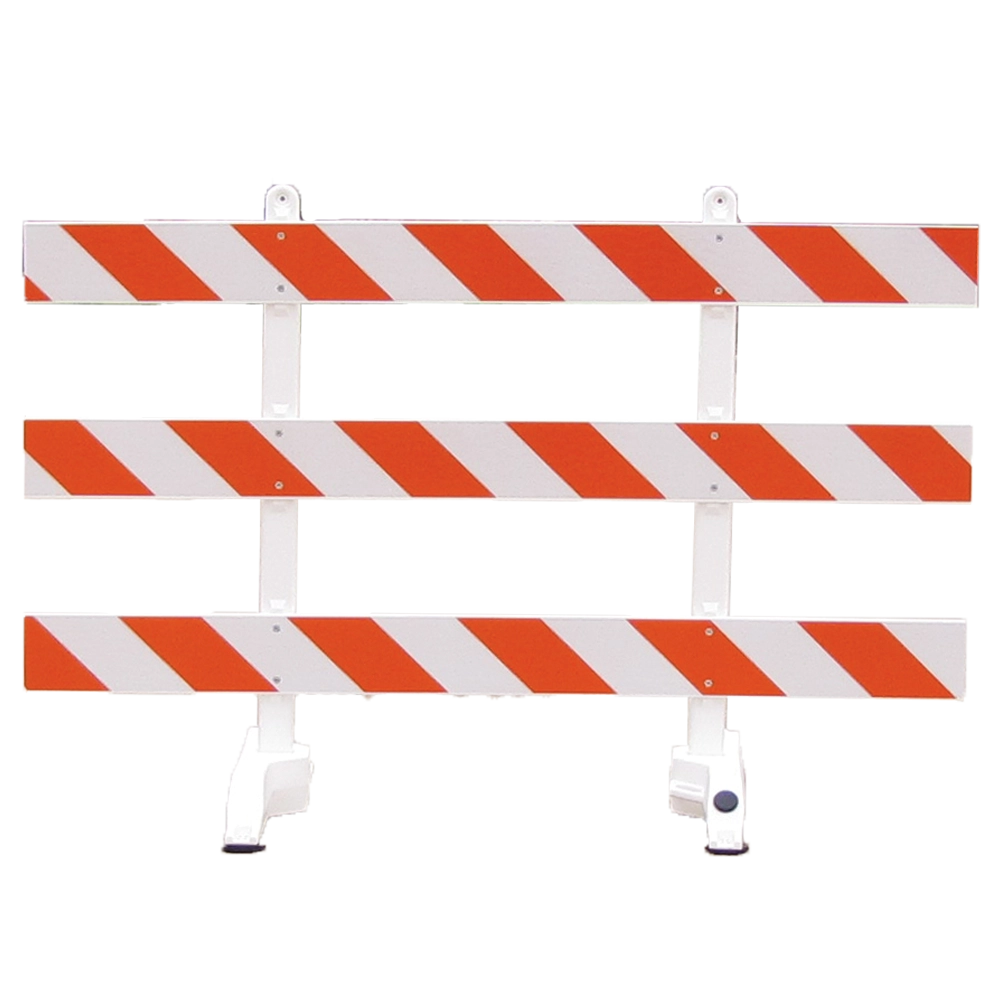 Barricades
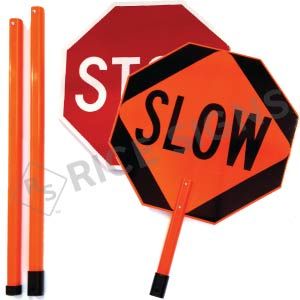 Stop Slow Paddles
 Flagger Ahead Sign
 Workers Signs
 Blasting Zone Signs
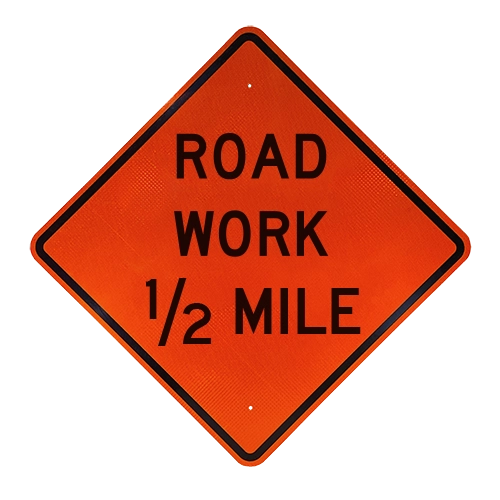
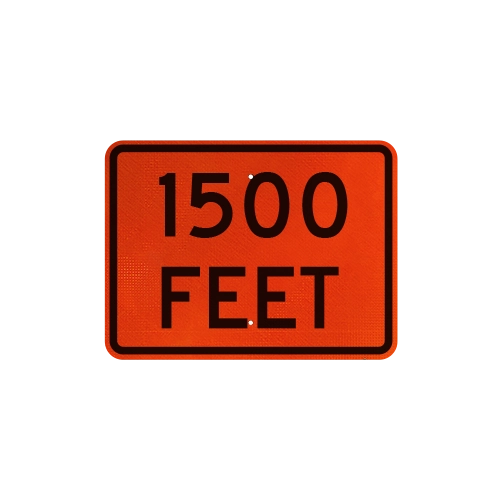 Distance
Government agencies, contractors, and municipalities — get volume pricing fast.
Get Volume Pricing Call 1-888-728-7665MASH and MUTCD Standards
The MUTCD is the federal standard governing the design and placement of all traffic control devices on U.S. public roads, covering sign sizes, colors, and reflectivity. MASH is a separate crash-test certification required for roadside hardware like barricades, ensuring they perform safely when struck by a vehicle.Types of Work Zone Signs
The MUTCD classifies temporary traffic control signs into four functional groups. Knowing which group you need shortens spec time and prevents reorder mistakes.
1. Warning Signs (W-series — orange diamond)
Orange diamond work zone warning signs alert drivers to upcoming hazards. The most common are the Road Work Ahead (W20-1), Workers Ahead (W21-1a), Flagger Ahead (W20-7a), Shoulder Work Ahead (W21-5), and Right Lane Closed Ahead (W20-5). A construction ahead sign is almost always a W20-1 with a distance plaque underneath (500 ft, 1000 ft, 1500 ft).
2. Regulatory Signs (R-series — black-on-white or red)
Regulatory signs carry the force of law inside the TTC zone. The Road Closed (R11-2), Road Closed To Thru Traffic (R11-4), and work zone speed limit signs belong here. A construction speed limit sign is a standard R2-1 in a black-on-orange variant when posted only during active work.
3. Guide Signs (G- and M-series — orange)
Guide signs route traffic around the closure. The Detour Ahead (W20-2), Detour Arrow (M4-9), and End Road Work (G20-2) bracket every project. The "end road work sign" tells drivers they have cleared the activity area and may resume normal speed.
4. Road Condition Signs (W8-series — orange diamond)
Used when pavement, shoulder, or surface conditions are altered by the work: Soft Shoulder (W8-4), Low Shoulder (W8-9), Shoulder Drop Off (W8-17), Uneven Lanes (W8-11), and Grooved Pavement (W8-15).
Reflective Sheeting Grades for Work Zone Signs
The MUTCD requires minimum retroreflectivity on every work zone sign so it remains legible at night. Most states specify one of three sheeting grades:
- High Intensity Prismatic (Type III/IV) — The most common grade for permanent work-zone signs and the minimum required by most state DOTs for orange construction signs.
- Diamond Grade / Ultra High Intensity (Type IX/XI) — Required by FHWA for overhead and freeway-mounted work zone signs and recommended for any sign posted on roads above 55 mph.
Call us at 1-888-728-7665 if your state DOT bid spec lists a sheeting type you do not see on a product page — we manufacture every sign in any approved grade.
Frequently Asked Questions
What are work zone safety products?
Work zone safety products are signs, barricades, channelizers, and traffic control devices used to protect workers and alert drivers whenever construction, maintenance, or utility work affects traffic on public roads. Common examples include road work ahead signs, type III barricades, traffic cones, flagging paddles, and roll-up signs.
Do your work zone safety products meet MUTCD and MASH standards?
Yes. All Rice Signs work zone safety products are manufactured to meet Manual on Uniform Traffic Control Devices (MUTCD) standards as required by the FHWA, making them suitable for use on federally and state-funded road projects. request a quote online for pricing on large orders.
What does the "End Road Work" sign mean?
The End Road Work (G20-2) sign marks the termination point of a TTC zone. Once a driver passes it, any work-zone speed limit, no-passing, or higher-fines regulation no longer applies. It is required on every TTC zone longer than two miles per MUTCD §6F.
When are speeding fines doubled in a work zone?
In most states, fines for moving violations double inside a posted work zone whenever workers are present — even if the posted speed is the regular limit. The Fines Double (R2-6aP) plaque and the "Speeding Fines Doubled When Workers Present" sign communicate this to drivers.
What is a soft shoulder sign and when is it used?
A Soft Shoulder (W8-4) sign is an orange diamond warning sign installed where the shoulder material is unpaved, recently graded, or otherwise unable to support a vehicle. It is typically posted during and immediately after paving operations and remains in place until the shoulder is compacted or stabilized.
How long does temporary work zone signage need to remain in place?
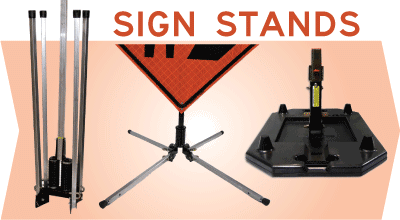
Per MUTCD §6G.02, all temporary traffic control devices must remain in place as long as the hazard they warn against exists. For long-term stationary projects (more than 3 days), permanent-mount aluminum signs on sign posts or skids are required. For short-duration work (less than 1 hour) or mobile operations, roll-up signs on portable stands are acceptable.
What sheeting type does my state DOT require?
Most state DOTs require a minimum of High Intensity Prismatic (Type III/IV) sheeting on orange work zone signs, but specific bid items may call for Diamond Grade (Type XI) on highways above 55 mph. We manufacture every sign in any approved grade — send us your bid spec and we will quote it exactly.
Who buys work zone safety products from Rice Signs?
Our work zone safety products are purchased by road construction contractors, municipalities, county and state highway departments, utility companies, and government agencies that need MUTCD-compliant traffic control devices for construction and maintenance projects.
Do you offer bulk or wholesale pricing on work zone safety products?
Yes. Rice Signs offers volume pricing for contractors, municipalities, and government agencies placing large orders. Contact us at 1-888-728-7665 or use our online quote form to request wholesale pricing on work zone signs, barricades, and traffic control devices.
How fast do work zone safety products ship?
Most in-stock work zone safety products ship same day or within one to two business days. Rice Signs ships nationwide to contractors, municipalities, and government agencies across the United States.
Can I order custom work zone signs?
Yes. Rice Signs produces custom work zone signs with custom text, legends, and sizes to meet project-specific requirements. Custom roll-up signs are also available in multiple colors and sizes with optional overlays. Call us at 1-888-728-7665 or request a quote online to discuss your custom sign needs.
The Four Areas of a Temporary Traffic Control (TTC) Zone
MUTCD Part 6C divides every work zone into four sequential areas. The signs and devices you need depend on which area you are setting up.
- Advance Warning Area — where drivers are first informed of the upcoming work. Uses W20-1 Road Work Ahead, W20-7 Flagger Ahead, and distance plaques (500 ft, 1000 ft, 1500 ft).
- Transition Area — where traffic is redirected out of its normal path. Uses lane-shift tapers built from traffic cones and channelizers, vertical panels, and W4-2 Lane Ends signs.
- Activity Area — where work actually occurs. Contains the work space, the buffer space, and the traffic space, separated by type II and type III barricades.
- Termination Area — where traffic returns to normal flow. Marked by the End Road Work (G20-2) sign.
Channelizing Devices: Cones, Tubes, Drums, and Vertical Panels
Channelizers are the cones, tubes, drums, vertical panels, and barricades used to guide traffic through or around a TTC zone. Choosing the right device depends on speed, duration, and visibility requirements.
| Device | Best Use | Typical Height | MUTCD Ref |
|---|---|---|---|
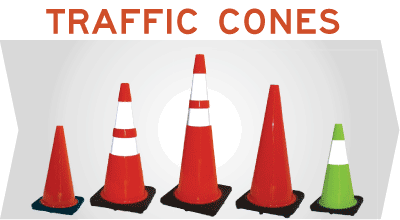
| Traffic Cones | Short-duration daytime work, low-speed roads | 18 in, 28 in, 36 in | 6F.65 |
| Grabber Tubes | Lane lines, longer tapers | 18 in, 28 in | 6F.66 |
| Vertical Panels | Narrow shoulders, pedestrian channels | 24 in × 8 in | 6F.67 |
| Channelizer Drums | High-speed highway, long-duration projects | 36 in (min.) | 6F.68 |
| Type I / II / III Barricades | Road closures, detour routing | varies | 6F.69 |
For full-road closures, a type 3 barricade with a Road Closed sign is the standard configuration. For lane-shift tapers on roads posted at 45 mph or above, MUTCD recommends 36-inch cones or 18-inch traffic cones only for low-speed urban streets.
Common Compliance Mistakes
- Using yellow diamond warning signs instead of orange. Permanent warning signs are yellow; temporary work zone signs must be orange (MUTCD §6F.02).
- Mounting signs too low.** Minimum mounting height is 7 ft to the bottom of the sign in urban areas, 5 ft on portable stands
- Leaving End Road Work signs up after the project ends. Drivers ignore future signage if they encounter "phantom" work zones.
- Skipping advance warning distance plaques on freeways.** Required at 1,000 ft / 1,500 ft / 2,640 ft on roads above 55 mph
- Using 18-inch traffic cones on high-speed roads. 28-inch is the minimum for roads above 45 mph; 36-inch drums above 55 mph.
- Mixing sheeting grades on the same project. Most state DOT bid specs require uniform sheeting (typically Type IV HIP or Type XI Diamond Grade).
- Forgetting the flagger station Stop Ahead sign. Required 500–1,000 ft in advance of any flagger per MUTCD §6E.08.
Work Zone Sign Code Glossary (MUTCD)
| Code | Sign | Use |
|---|---|---|
| W20-1 | Road Work Ahead | Advance warning, all projects |
| W20-2 | Detour Ahead | Advance of a detour route |
| W20-3 | Road Closed Ahead | Advance of a full closure |
| W20-4 | One Lane Road Ahead | Two-way one-lane operation |
| W20-5 | Lane Closed Ahead | Lane shift / merge |
| W20-7 | Flagger Ahead | Advance of a flagging station |
| W21-1 | Workers Ahead | Active worker presence |
| W21-5 | Shoulder Work Ahead | Work in the shoulder only |
| W22-1 | Blasting Zone | Beginning of a blasting area |
| R11-2 | Road Closed | At the point of closure |
| R11-4 | Road Closed To Thru Traffic | Local access permitted |
| G20-1 | Road Work Next X Miles | Project length marker |
| G20-2 | End Road Work | Termination of TTC zone |
| M4-9 | Detour (with arrow) | Detour route navigation |
Not sure which sign or reflective grade you need? Our team has helped thousands of contractors and municipalities get it right — call or get a quote and we'll recommend exactly what you need.
Get a Free Recommendation Call 1-888-728-7665
