When Should “One Lane Road Ahead” Signs Be Used?
Published
Introduction
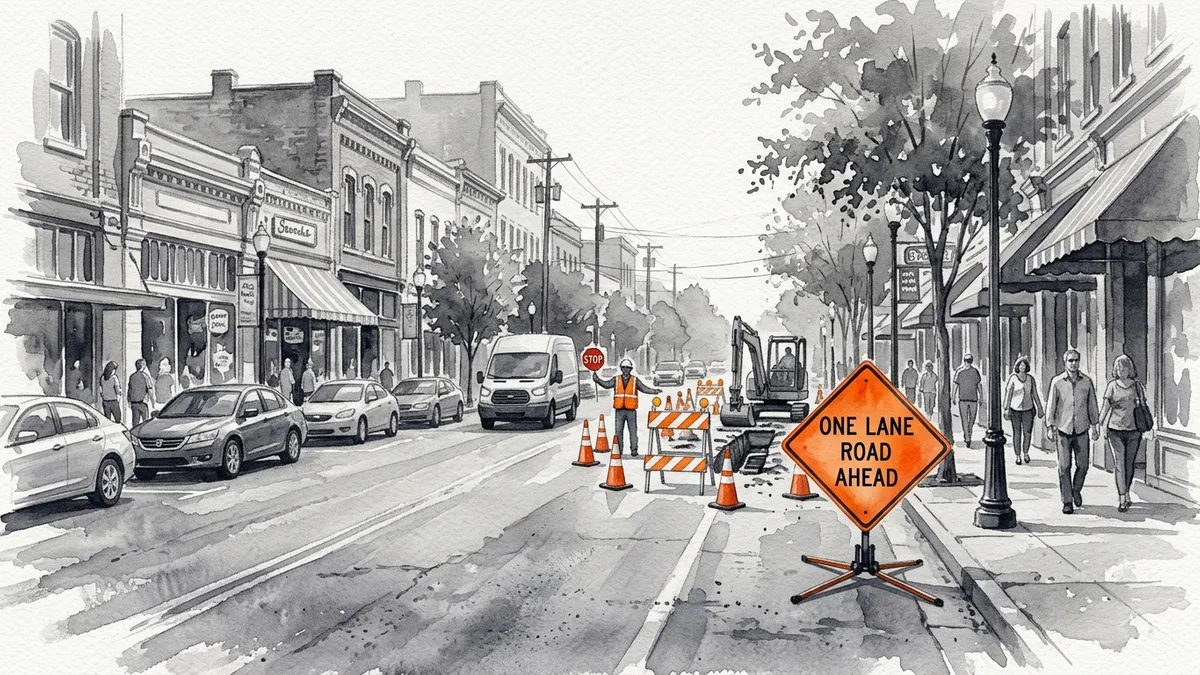
During active road work on a two-lane road, travel can narrow into temporary one-lane traffic. A One Lane Road Sign (W20-4) tells drivers that traffic in both directions will share a single lane (6H.06).
What Sign Is Typically Used?
The distance legend for One Lane Road Signs can be XX FEET, XX MILES, or AHEAD (6H.06). Signs using the AHEAD legend are a popular, versatile choice.
One Lane Road Signs may appear with others in the following order (Figure 6P-10):
- Road Work Ahead Sign – lets drivers know about upcoming road work
- One Lane Road Ahead Sign – informs drivers that two-way traffic will alternate ahead
- Be Prepared To Stop Sign – warns drivers that it’s likely they need to completely stop
- Flagger Ahead Sign – alerts drivers to flagger-controlled, one-lane traffic ahead
- End Road Work Sign – marks the end of a work zone
Not sure which Flagger Ahead Sign to choose? See Symbol vs. Text Flagger Ahead Signs.
What Types of Work Commonly Use This Sign?
A wide range of specialized work zones use One Lane Road Ahead Signs as part of their lane closure signage. For lane closures due to utility work, road repairs, or bridge repairs, traffic signs are a key communication device.
Utility and Roadside Work
Even when construction work or utility maintenance is on the roadside, lane closures establish space between the work zone and passing traffic.
- Directional boring near narrow shoulders
- Roadside utility excavation
- Drainage installation
Rural and Temporary Lane Closures
Oftentimes, lanes are closed when a road needs repaving, is partially damaged by storms, or when it has worn out through wear and tear.
- Paving projects
- Shoulder failures
- Emergency roadway repairs
Bridge and Roadway Repairs
In some cases, lane closures protect drivers from sudden drop-offs that are exposed because of bridge or road repairs.
- Bridge rehabilitation
- Culvert replacement
- Pavement edge/guardrail repair
How One-Lane Traffic Is Typically Controlled
Workers adapt general traffic control methods to specific traffic conditions using one or more of the following:
- Flaggers with Stop/Slow Paddles (6E.02)
- Red or fluorescent orange-red flags should be limited to emergencies (6D.03)
- Temporary traffic control signals at each end of the one-lane section (6E.05)
- Automated flagger assistance devices – remote-controlled Stop/Slow or red/yellow light devices run by a flagger (6L.02)
- Pilot cars, which lead a queue of vehicles through the work zone (6E.04)
- Flag transfer – when the driver of the last vehicle carries a flag to the opposite end, usually on sections no more than 1 mile long (6E.03)
- Stop or Yield Signs – for low-volume roads when drivers can easily see the end of the one-lane road (6E.06)
Temporary traffic control (TTC) devices like Traffic Cones, Channelizer Drums, and Barricades form a taper, 50 to 100 feet long, that guides drivers into the open lane (6B.08).
Where “One Lane Road Ahead” Signs Should Be Placed
In general, One Lane Road Ahead Sign placement depends on local engineering judgment, which is based on MUTCD standards. Engineers consider these factors:
- Roadway speed
- The faster the travel speed, the more notice a driver needs
- Hills and curves
- Changes in the road shape can affect sign visibility from a distance
- Expected queue length
- Drivers need to be alerted long before reaching the queue
State and Local Requirements
It’s essential to verify local signage and temporary traffic control rules before setting up a lane closure. Agencies on the state and local level often set clear guidelines on TTC standards, such as:
- TTC sign sequences and materials
- Taper lengths and preferred TTC devices
- Flagger qualifications
- Temporary signal usage
At night, flagger stations must be illuminated, except in emergencies (Figure 6P-10, Note 7).
Conclusion
As noted in the MUTCD, One Lane Road Signs are used ahead of the point where two-way traffic must share one lane (6H.06). Place One Lane Road Ahead Signs, or their variations, with other TTC signs to protect workers’ and drivers’ safety.