Type A, B, or C: Which Barricade Lights Should You Use in Work Zones?
Published
Introduction
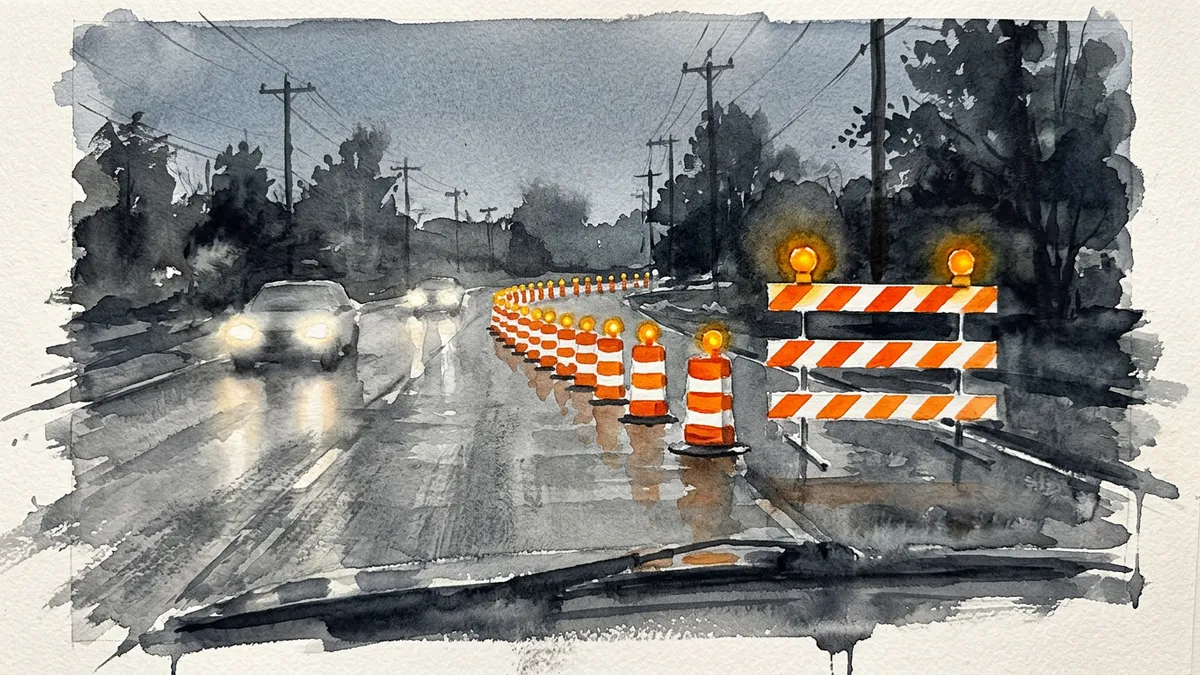
In a typical temporary traffic control (TTC) zone, several Work Zone Signs, Barricades, and Channelizing Devices are set up on or near the roadway. They’re manufactured with retroreflective materials, keeping them visible in the daytime and nighttime. Adding a TTC warning light will make those devices even more visible to drivers, bicyclists, and pedestrians.
“Barricade Light” vs. “Warning Light”
There’s no real difference between the two terms, because Barricade Lights and Warning Lights refer to the same device. The MUTCD calls them “warning lights” throughout its guidance.
Section 6L.07 describes Warning Lights as:
- Portable
- Powered
- Yellow
- Lens-directed
- Enclosed
They’re commonly mounted onto Type 1, Type 2, and Type 3 Barricades, so most people call them Barricade Lights.
Why Barricade Lights Are Used
Visibility at any time of day is key when setting up Barricades to partially or fully close a road. Barricade rails have retroreflective sheeting that bounces light from vehicle headlights back to the driver.
However, at twilight and in overcast weather, light in the environment isn’t as bright. It’s also likely that drivers haven’t switched their vehicle headlights on yet. From a distance, Barricades can be hard to see in those low light conditions. Adding Barricade Lights bridges that gap by improving the TTC device’s visibility.
Common Types of TTC Barricade Lights
Each Barricade Light “Type” has a different appearance, brightness, and function. Although Type A, B, and C are the most common Barricade Lights, information on Type D lights is included below.
| Type | Light Mode | Daytime | Nighttime | Use |
|---|---|---|---|---|
| Type A | Flashing | — | Low intensity | Nighttime warning of hazards |
| Type B | Flashing | High intensity | High intensity (some models dim automatically) | 24/7 warning of hazards |
| Type C | Steady burn | — | Low intensity | Outlines the travel path at night |
| Type D | Steady burn, 360 degrees | — | Low intensity | Outlines the edge of the road at night |
Our BL-LED Barricade Light has two light modes—one covers Type A requirements and the other covers Type C requirements. The BL-LEDB Barricade Light covers only Type B requirements.
When to Use Flashing or Steady Burn
- Flashing – lights must flash when a channelizing device is used alone or in a small group to warn of a hazard (6L.07).
- Steady burn – lights on channelizing devices used in a row to guide traffic must be steady burn. Flashing lights must not be used to outline a travel path (6L.07).
- Sequential flashing – the one exception. Lights on a merging taper may flash one after another, from the start of the taper to the end, 55 to 75 times per minute (6L.07).
- On curves – steady-burn Type C and Type D lights should be used only on the outside of the curve (6L.07).
Where Barricade Lights Are Used
The more visibility the conditions call for, the more important using Barricade Lights becomes. Common situations where Barricade Lights are used to add visibility to TTC channelizing devices include:
- Road closures – Flashing Type A mounted onto Type 3 Barricades
- Lane closures – Steady-burn Type C mounted onto Channelizer Drums
- Shoulder closures – Steady-burn Type C mounted onto Vertical Panels
- Advance warning signs – Flashing Type B mounted on the sign
- Detour routes – Flashing Type A mounted onto Type 3 Barricades where the detour starts
The MUTCD also allows Barricade Lights on channelizing devices when frequent fog or snow, sharp curves, or visual distractions are present (6K.01). These decisions are based on local engineering judgment (6L.07).
TTC Device Compatibility and Use
Barricade Lights are commonly paired with the following TTC devices to improve their visibility:
- Type 1, 2, and 3 Barricades
- Channelizer Drums
- Vertical Panels
- ADA Walls
- Advance warning signs (Type B)
When mounting Barricade Lights, the MUTCD requires the following (6L.07):
- The bottom of the lens must be at least 30 inches above the ground.
- The light must be mounted so that, if a vehicle hits the device, it is not likely to go through the windshield.
- Lights should be spaced no farther apart than the channelizing devices they are on.
Local traffic agencies may specify several aspects of Barricade Light use, such as which TTC device to choose, how often maintenance is required, and which light types are approved.
Conclusion
Using Barricade Lights makes it easier for drivers, bicyclists, and pedestrians to spot TTC channelizing devices, especially at night and in low light. Remember the simple rule: flashing lights warn, and steady-burn lights guide.