
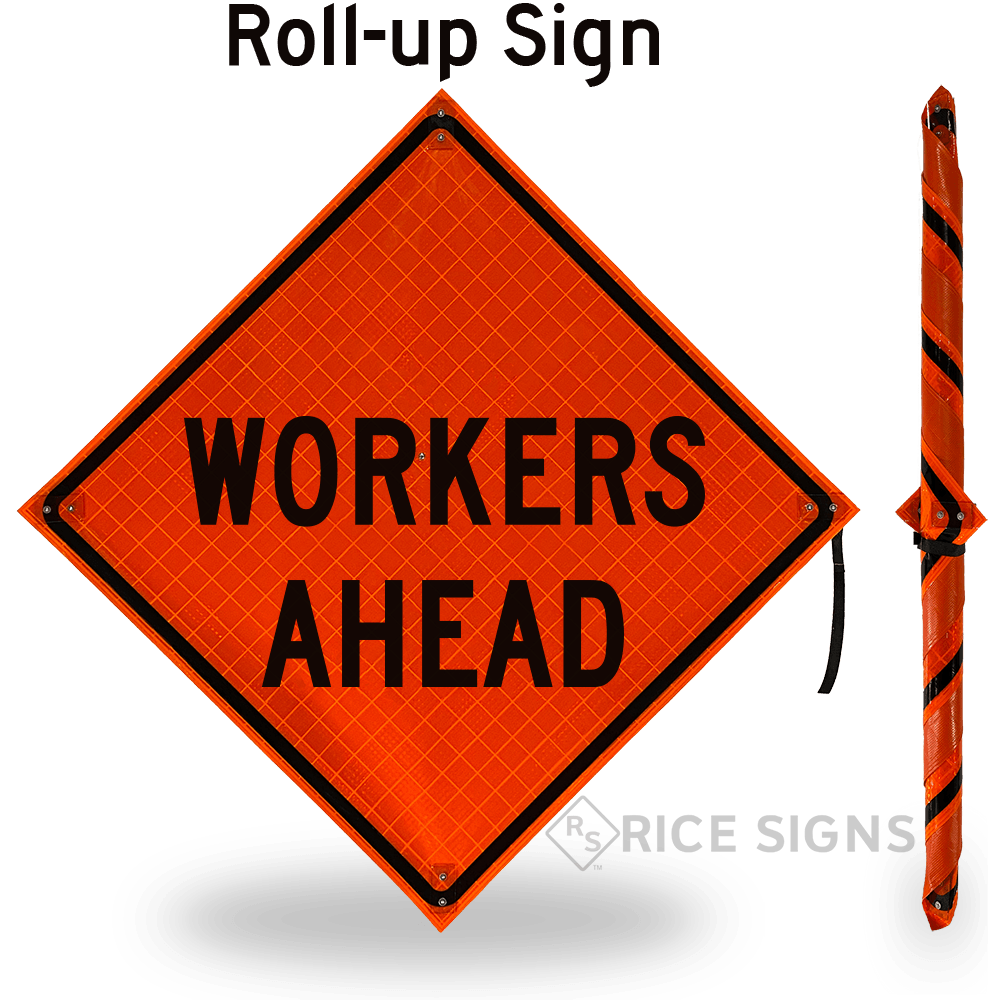
 RU35 Roll-up
  MUTCD W21-1A
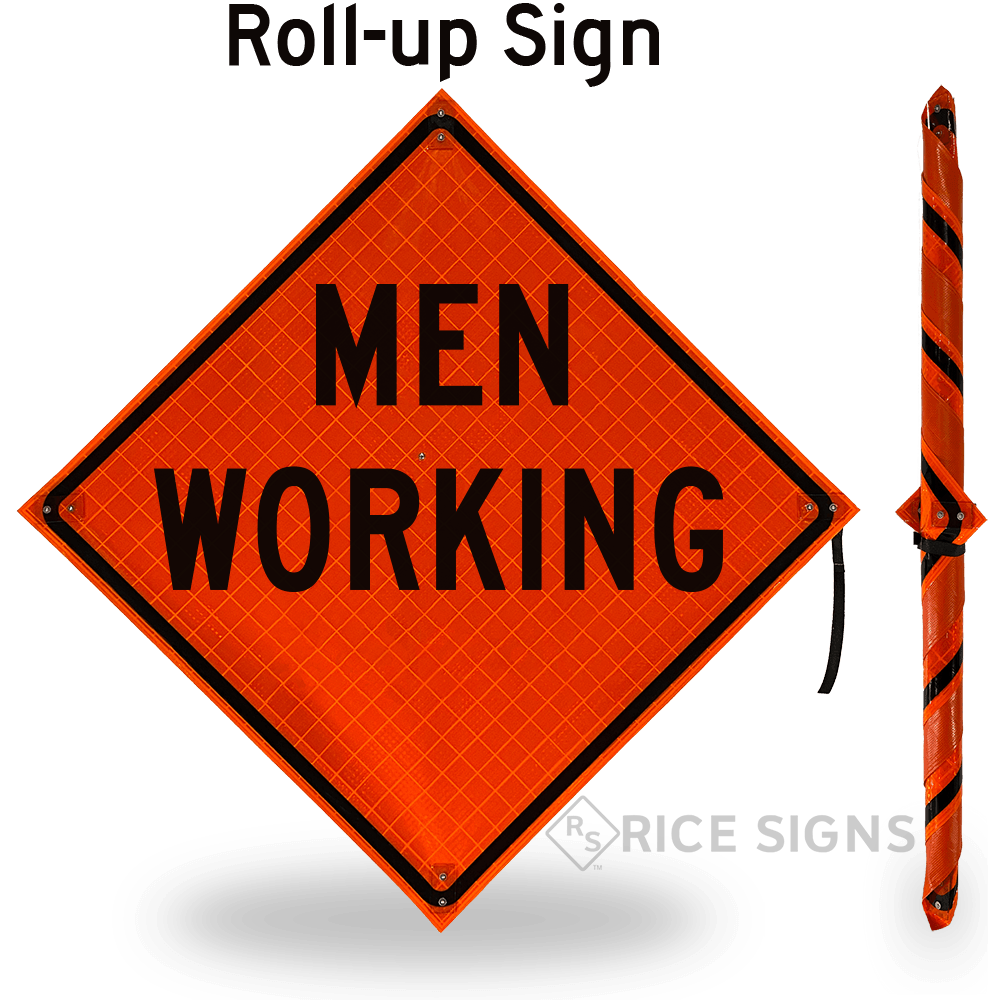 RU10 Roll-up
 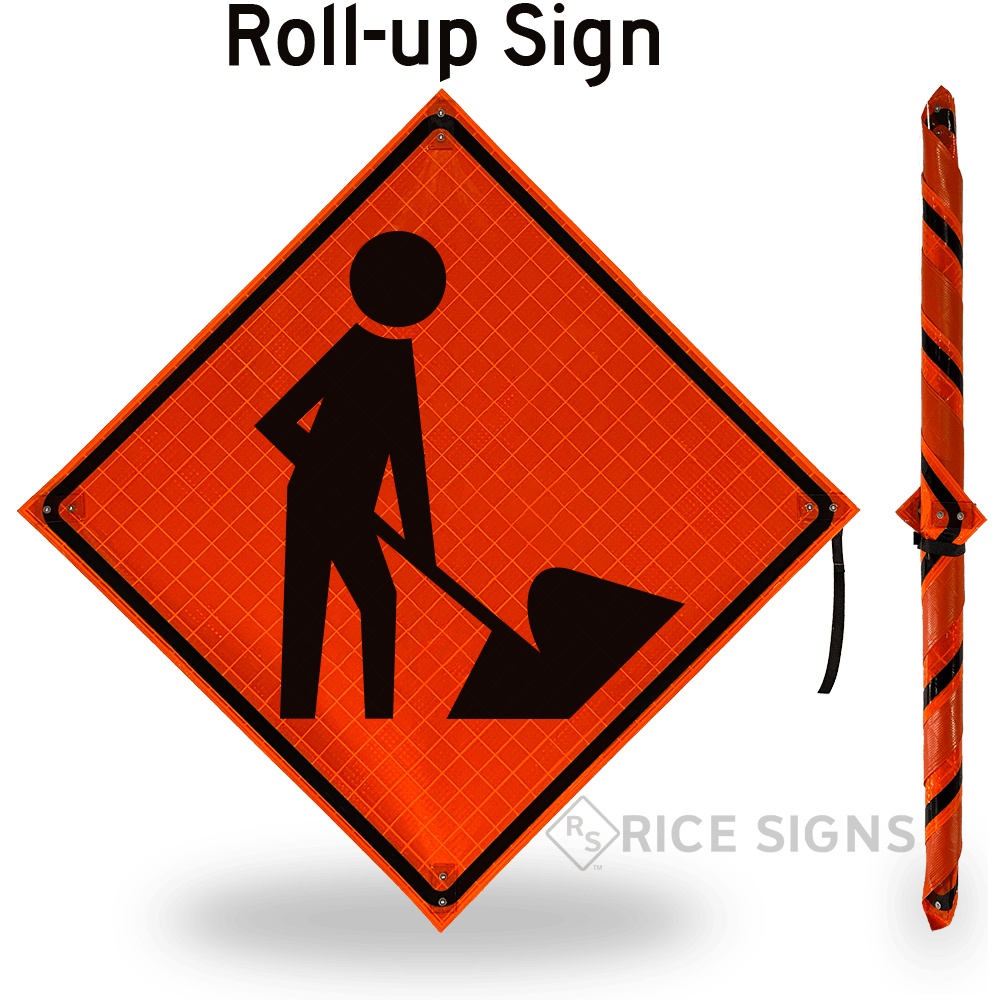 RU11 Roll-up
 About Workers Signs
What are Workers Signs?
Workers Signs alert drivers to the presence of workers on the road or roadside. These orange, diamond-shaped warning signs are designed for “temporary traffic control” (TTC) use, and they should only be visible to drivers when workers are present at that time.
In what situations are Workers Signs used?
When other warning signs or devices aren’t being used, and when workers are present, a “Workers” Sign, a “Workers Ahead” Sign, or a Workers Symbol Sign should be placed on the roadside and be highly visible. When possible, more descriptive signs, such as Utility Work Ahead Signs and Road Work Ahead Signs, should be used so that drivers can better expect what is ahead on the roadway.
In the absence of other warning devices, a Workers sign should be used when workers are in the roadway. (Chapter 6H, Section 6H.18, Paragraph 02)
What signs are used alongside Workers Signs?
A Flagger Symbol Sign, Mowing Ahead, or Right/Left Lane Closed Ahead Sign may appear ahead of a Workers Sign.
Selecting a Workers Sign
When can I use a “Men Working” Sign?
“Men Workers” and “Men Working” Signs have been absent from MUTCD recommendations for several editions, so they have mostly fallen out of use. “Workers” and “Workers Ahead” Signs have taken their place in federal guidance, but “Men Working” Signs are still preferred in some local jurisdictions.
Should I choose the Workers Symbol Sign or the “Workers” Sign with written messaging?
The symbol and word versions of the Workers Sign are functionally identical in the MUTCD, which lists that the text sign can be used as an alternate to the symbol sign.
The WORKERS (W21-1a) word message sign may be used as an alternate to the Workers (W21-1) symbol sign. (Chapter 6H, Section 6H.18, Paragraph 03)
What sign sizes are available, and which one do I need?
For rigid signs, 30”x30”, 36”x36”, and 48”x48” sizes are available, and for roll-up signs, 36”x36” and 48”x48” signs are available. On roads and highways, 36-inch signs should be used, and on interstates, 48-inch signs should be used. 30-inch rigid signs are the federal minimum size and are reserved for low-volume, low-speed local roads.
See Table 6H-1 Temporary Traffic Control Zone Warning Sign and Plaque Sizes (Sheet 2 of 2), pg. 804 for more information.
When should I choose a roll-up sign over a rigid sign, and vice versa?
In most cases, roll-up signs are used in short-term projects, and rigid signs are used in medium- to long-term projects. If robust wind resistance is a priority, mount rigid signs onto sign posts or onto our RU5000 dual-spring sign stands
Mounting Workers Signs
What mounts are available for Workers Signs?
Roll-up signs can be mounted onto one of our compatible sign stands, and rigid signs are generally mounted onto round, square, or U-channel sign posts. 36”x36” rigid signs have two pre-punched mounting holes and require one post, while 48”x48” signs have four pre-punched mounting holes and require two posts.
Materials, Shipping & More Information
What materials are used in the Workers Sign manufacturing process?
For rigid signs, .080” rustproof aluminum provides the base for your choice of orange high-intensity prismatic (HIP) or fluorescent orange full-cube prismatic (FCP) sheeting. Roll-up signs can be manufactured with one of many reflective or non-reflective materials.
How are Workers Signs shipped?
Rigid signs are layered back-to-back with slip sheeting covering each sign face for protection. Roll-up signs arrive tightly rolled in a tall, narrow box.
Where can I find more information about Workers Signs?
Part 6 Chapter H of the MUTCD contains guidance on TTC Zone Warning Signs, a category that includes Workers Signs.

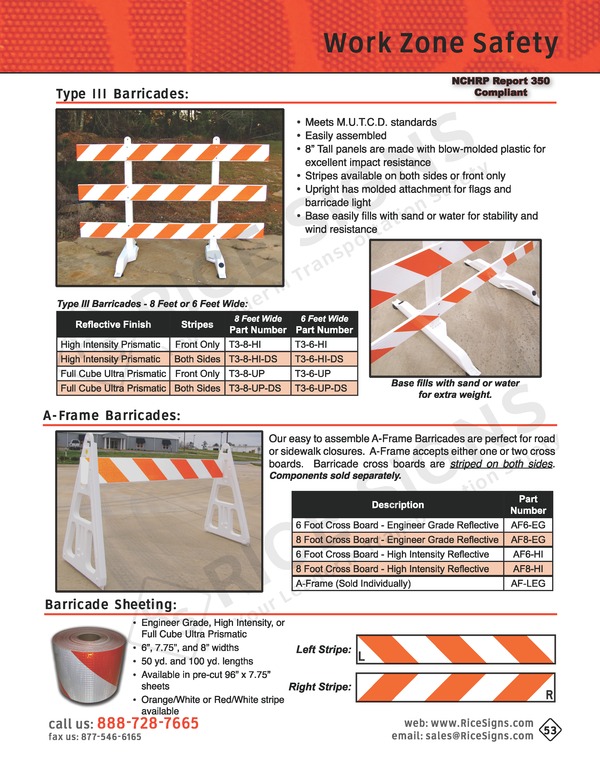
Catalog Page 53
Click to view
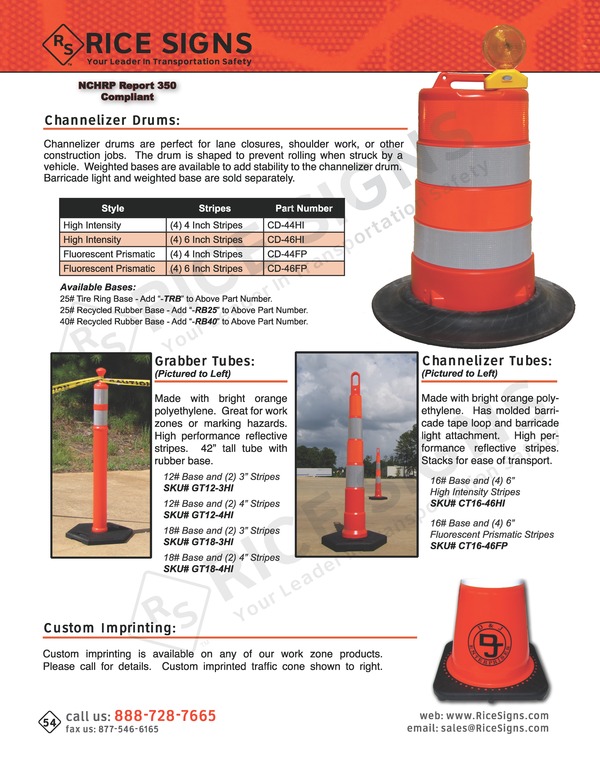
Catalog Page 54
Click to view
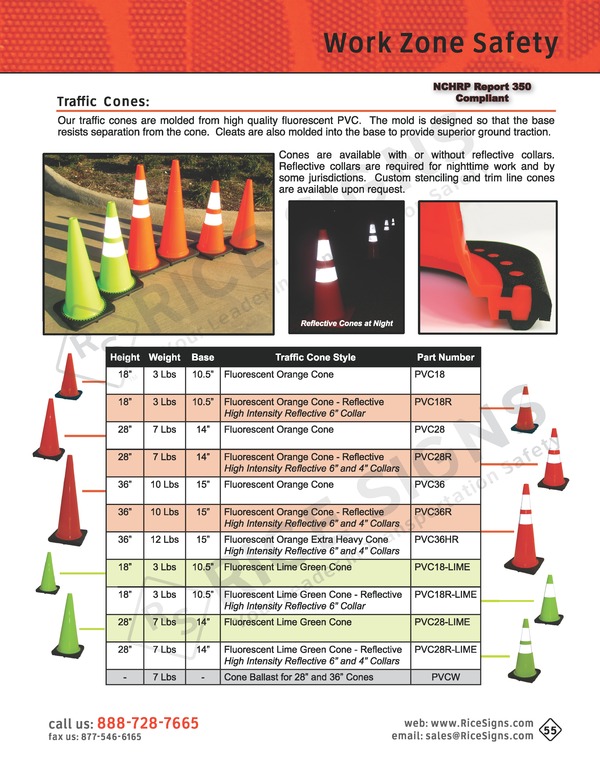
Catalog Page 55
Click to view
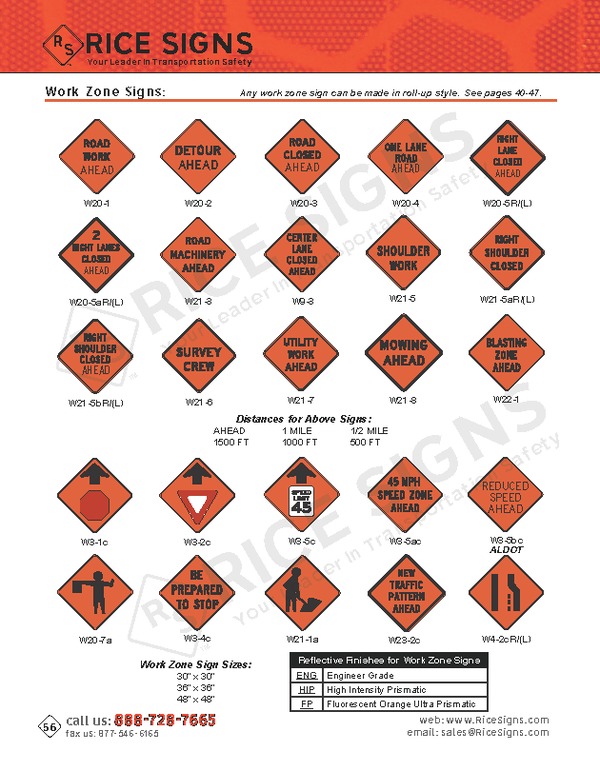
Catalog Page 56
Click to view
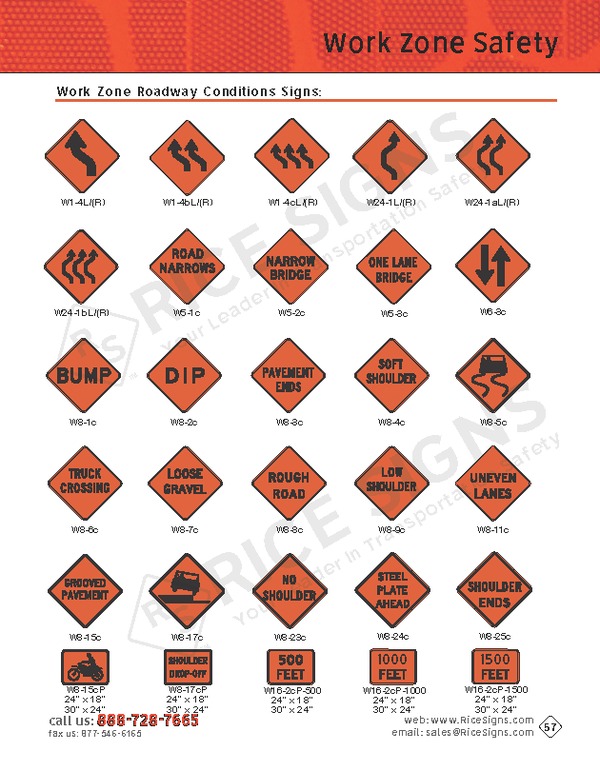
Catalog Page 57
Click to view
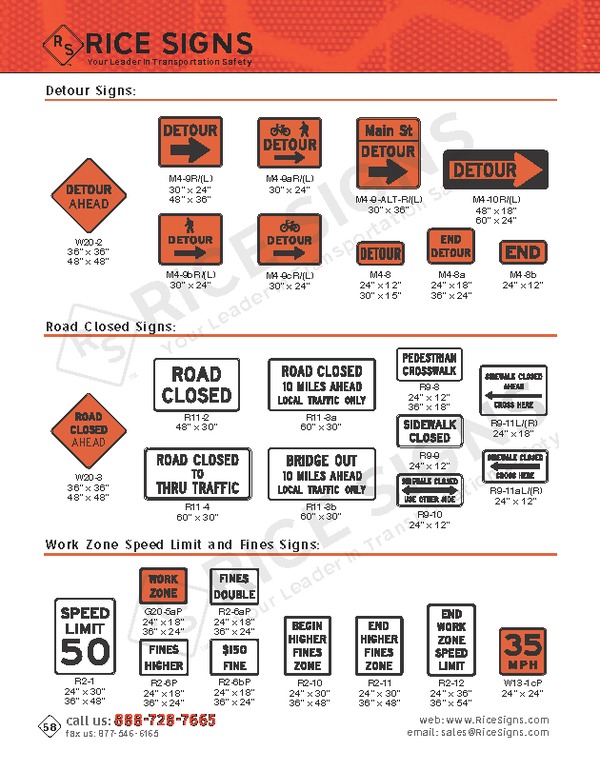
Catalog Page 58
Click to view
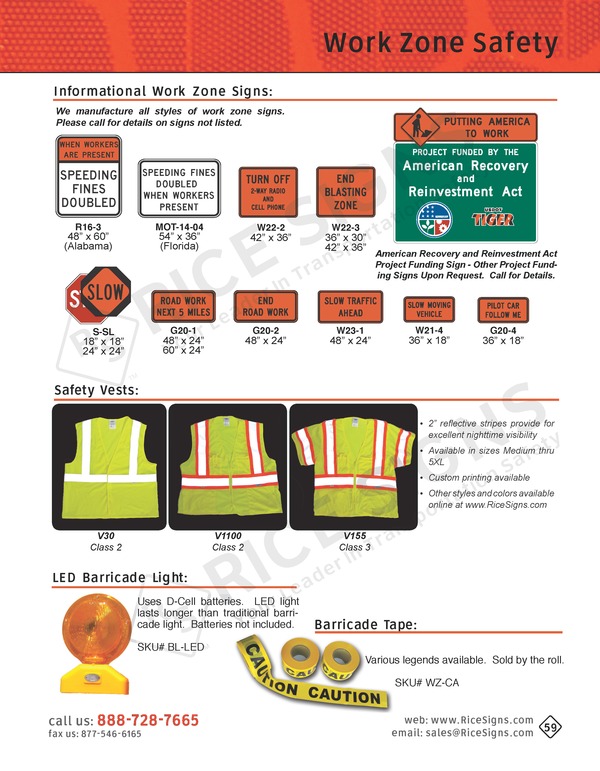
Catalog Page 59
Click to view
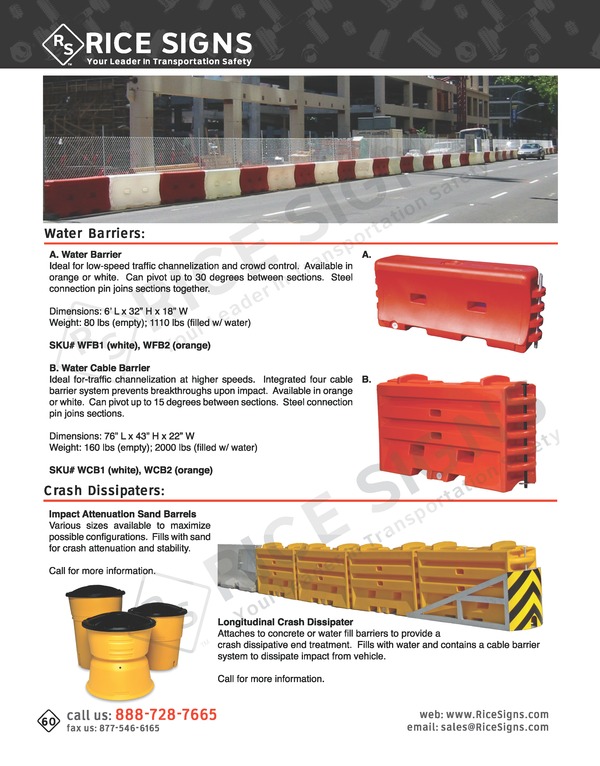
Catalog Page 60
Click to view

